
WINKLER, MB: Manufacturing shops, construction companies, and offices across the Pembina Valley are running short-staffed at the same time, and a growing number of local employers are dropping the job board posting that used to be the default first step.
The shift is easy to miss from the outside because it happens one hiring cycle at a time, but the pattern holds across industries: employers are replacing the generic listing with something closer to a customer-acquisition campaign. A specific offer instead of a template. Ads written to filter candidates before they click. A screening step before anyone books an interview. The approach isn't new, Manitoba construction companies have used versions of it for more than a year, but its arrival in Winkler's manufacturing shops and offices is recent.
At a glance
- Manufacturing, construction, and office employers in the Pembina Valley are competing for the same small pool of candidates at the same time.
- One Manitoba framing company that adopted the approach generated 39 candidates in 30 days for $385.20 in total ad spend, about $9.88 per candidate.
- Recruiters serving the region typically charge 15 to 25 percent of a hire's first-year salary, a fee that resets with every placement.
One labour pool, three industries competing for it
Drive around Winkler and the competition is visible on the signs themselves: one shop looking for painters, another for welders, a third for both, sometimes three postings for the same trade within a few blocks of each other. Different employers, the same short list of candidates, all bidding for attention at once.
Pay isn't the gap. Wages across the Pembina Valley are already competitive with each other. The question every one of those postings is actually answering, whether it means to or not, is how to stand out from the noise when everyone's offering roughly the same rate. The businesses still filling seats aren't the ones paying the most. They're the ones giving a candidate a reason beyond the number on the posting.
That pressure shows up differently depending on the work:
- Manufacturing. Production and machine operator roles need someone who can start fast and stay through a full run. When the shop down the road is hiring for the same skill set, a generic posting gets buried, and both employers end up bidding for the same three applicants.
- Construction. Construction companies and skilled trades feel seasonal pressure hardest. A slow spring hire puts a booked summer schedule at risk, and Winnipeg contractors, pulling from a larger labour pool and a larger budget, make a Winkler posting easy to scroll past.
- Office and professional roles. Admin, accounting, and operations roles lose candidates to Winnipeg salaries before a local employer gets a chance to make the case for staying. Without a clear reason to choose local, pay alone loses that comparison.
What one Manitoba hiring campaign actually cost
The clearest local data point comes from FrameX Unlimited, a Manitoba framing company that used a version of this approach, built by the Winkler-based growth firm Benske & Co., to fill out its crew. The campaign produced 39 candidates in 30 days for $385.20 in total ad spend, or roughly $9.88 in advertising spend per candidate. That figure covers ad spend per candidate, not total cost per hire, and it will vary by role and by how much competition exists for the same ad space in a given market.
“We didn’t have a lot of expectations but after working with Benske we have tripled our crew size and increased our revenue. They have put us on the map,” said Justin Smith, president of FrameX Unlimited, in comments provided for a case study on the project. The hiring campaign was one part of a broader marketing effort behind that result, alongside a new website and paid advertising aimed at general contractors.
Want a hiring system installed in your business? Click here →The offer, the ad, and the screening step
The approach breaks into three parts, applied to the role before any posting goes out.
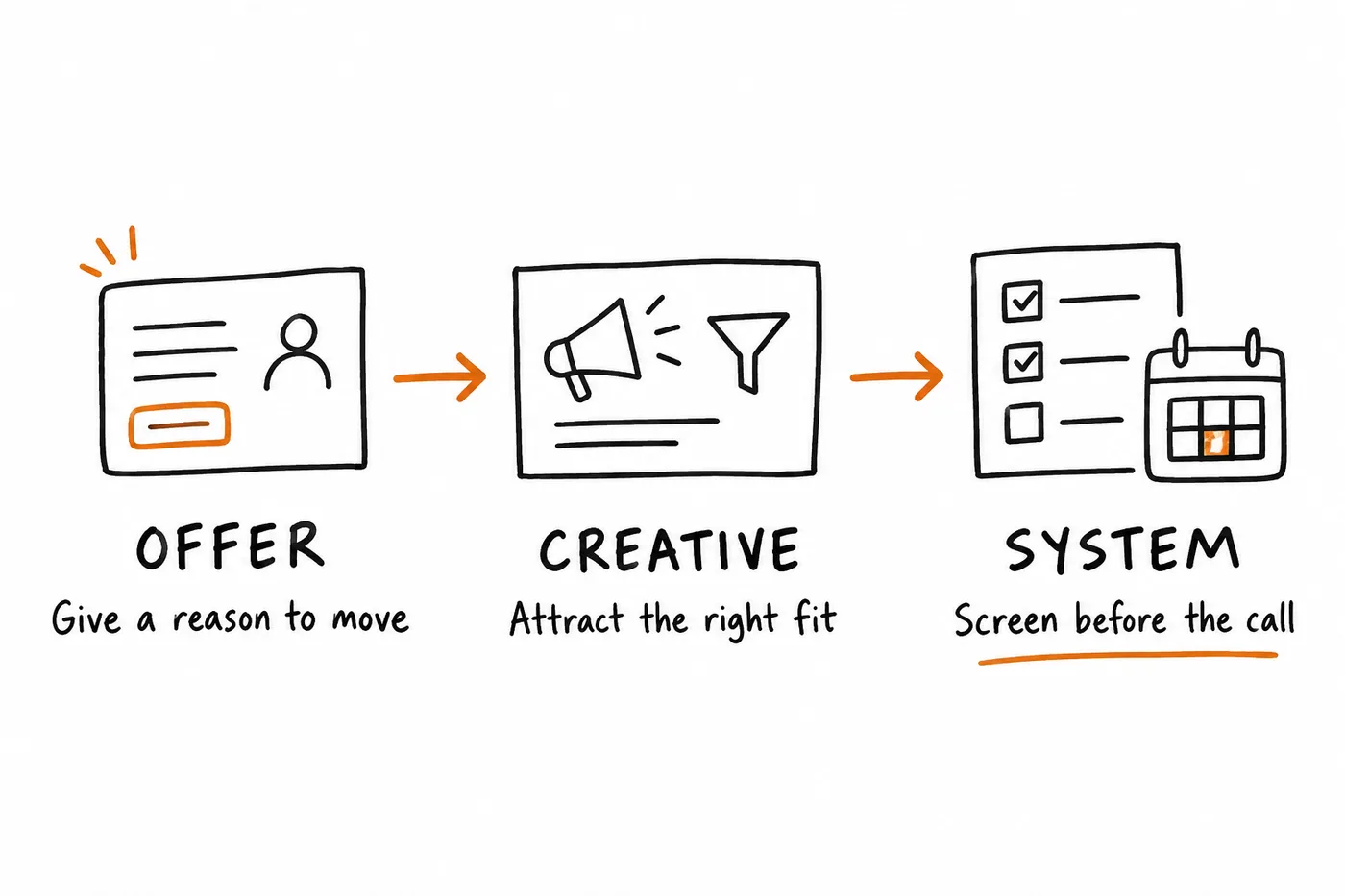
The first is the offer itself. Most local postings still lean on the same three phrases, competitive pay, great team, growth opportunities, language every competitor in the area is already using, which means none of it gives a candidate a reason to choose one employer over another. A stronger offer states specifics a template never does: a shorter commute than driving to Winnipeg, a defined shift schedule, what the work actually looks like on a Tuesday, and what happens in year one for someone who's good at the job.
The second is the ad itself. Creative written to filter, rather than simply announce, does qualification work before a candidate ever clicks. A headline like “Experienced Machine Operators” or “Framers Who Show Up” tells the wrong applicant this role isn't for them and tells the right one the ad is speaking directly to them. In a market this small, that filtering carries more weight than it would in a bigger city, there's no room to sort through fifty unqualified applications when the entire local candidate pool might only run a few hundred people.
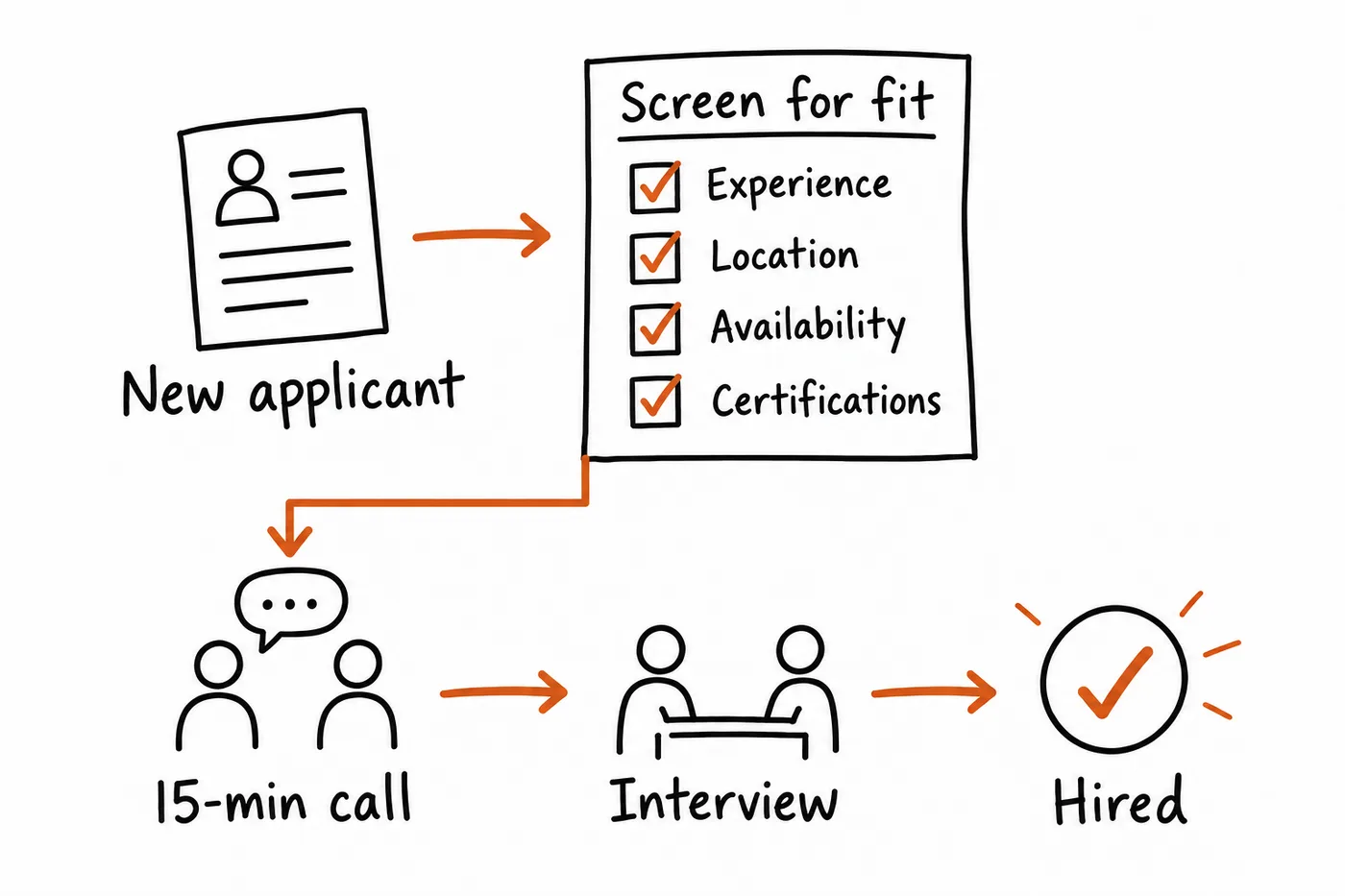
The third is a short screening form, covering experience, availability, and location, that replaces the resume as the first filter. It's a particularly useful step in the Pembina Valley, where “location” can be the difference between a candidate who actually lives local and one who will commute for three weeks and then stop. Candidates who clear the screening and stay interested book a short pre-interview. That's who reaches the shop floor, the job site, or the office, not an unfiltered stack of applications.
The alternative to job boards and recruiter fees
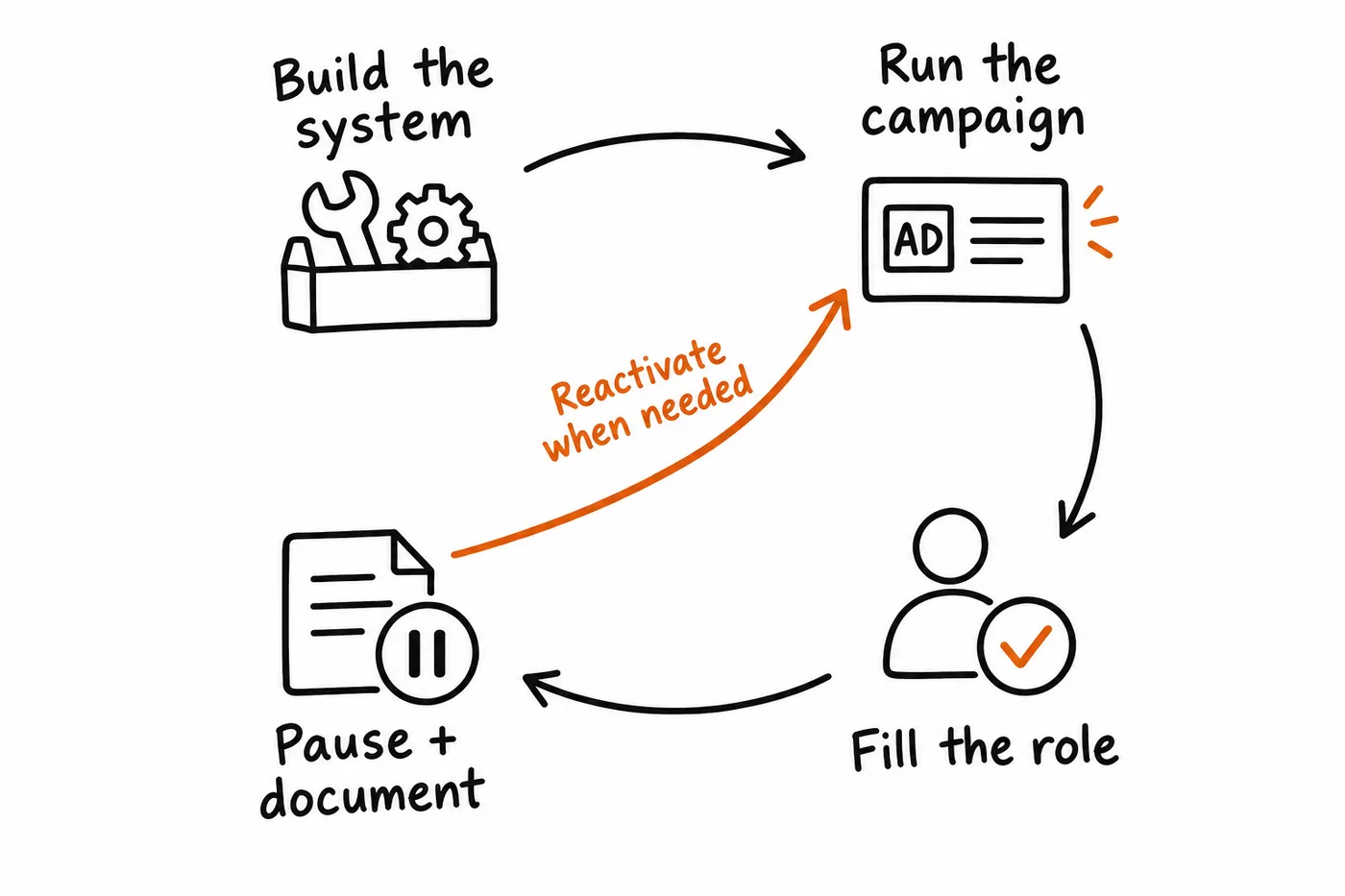
Winkler employers have historically had two options: post the job and wait, or hire a recruiter and pay 15 to 25 percent of a hire's first-year salary, a fee that resets on the next hire. The approach described here is a third option, built once for a role, run when there's a seat to fill, then paused and documented until the business needs to hire again, rather than rebuilt from nothing each time.
Benske & Co., the Winkler-based firm behind the FrameX campaign, is offering local manufacturers, contractors, and offices a short call to review a specific open role and whether the same approach fits. More on the system is available on its site.
Questions Winkler employers ask
- Why is hiring harder in Winkler than in a bigger city?
- Winkler and the Pembina Valley have a small labour pool relative to the number of manufacturers, contractors, and offices competing for it. A shop, a job site, and an office can all be short-staffed at the same time, chasing the same short list of qualified people. Fewer candidates means every posting has to work harder to stand out.
- Can a Winkler business really compete with Winnipeg wages?
- Not always on pay alone, and it usually does not need to. Commute time, shift stability, shop culture, and a faster path to a role people actually want to do all factor into a decision to stay local. The offer has to say that plainly instead of assuming candidates already know it.
- Do job boards even work in a market this small?
- They reach the same people every other local employer is already reaching, at the same time. In a small labour market that means duplicate exposure to the same short list, not new candidates. Targeted, qualifying ads reach people a generic posting misses, including people not actively browsing job boards.
- What roles does this work for?
- Machine operators and production staff in manufacturing, framers and skilled trades in construction, and office and admin roles that lose candidates to bigger employers. The framework is the same across all three: a specific offer, ads that filter before the click, and a screening step before anyone books an interview.
- What does it cost to run in a market this size?
- A comparable Manitoba campaign produced 39 candidates for $385.20 in total ad spend, roughly $9.88 in advertising spend per candidate. That figure is ad spend per candidate, not total cost per hire, and it will vary by role and local competition for the same ad space.
- How is this different from calling a recruiter?
- A recruiter charges 15 to 25 percent of first-year salary per placement, and the fee resets on the next hire. This system is built once, documented, and reactivated the next time a Winkler business needs to fill a seat, so the cost is not a full reset every time.


