



TL;DR: Before you build an agent system, identify the one workflow consuming the most recurring time, pick a single task inside it, and build that properly. Complexity is earned, not assumed. Most businesses get more from one dependable automation than from many that need constant checking.
-
AI agents sound impressive. The overhead they introduce is real.
-
Start with the workflow taking the most recurring human time, not the most exciting use case.
-
A task is automation-ready when you can define what it receives, what it does, and what a correct result looks like.
-
Build until the output is dependable before expanding scope.
-
Count the work that remains after the system runs. That number tells you whether the build actually helped.
A fleet of AI agents is a complicated place to start when your business still has one recurring task eating up too much of the week.
Before designing a system that can do everything, get clear on which piece of work would actually be worth taking off someone’s plate.
For a business putting AI to work, the sensible starting point is narrow: identify the workflow consuming the most time, choose one task within it, and build that task properly.
That might require AI. It might require straightforward automation. It might require cleaning up the process before adding either. The choice should follow the work.
Why Complexity Creates an Obligation
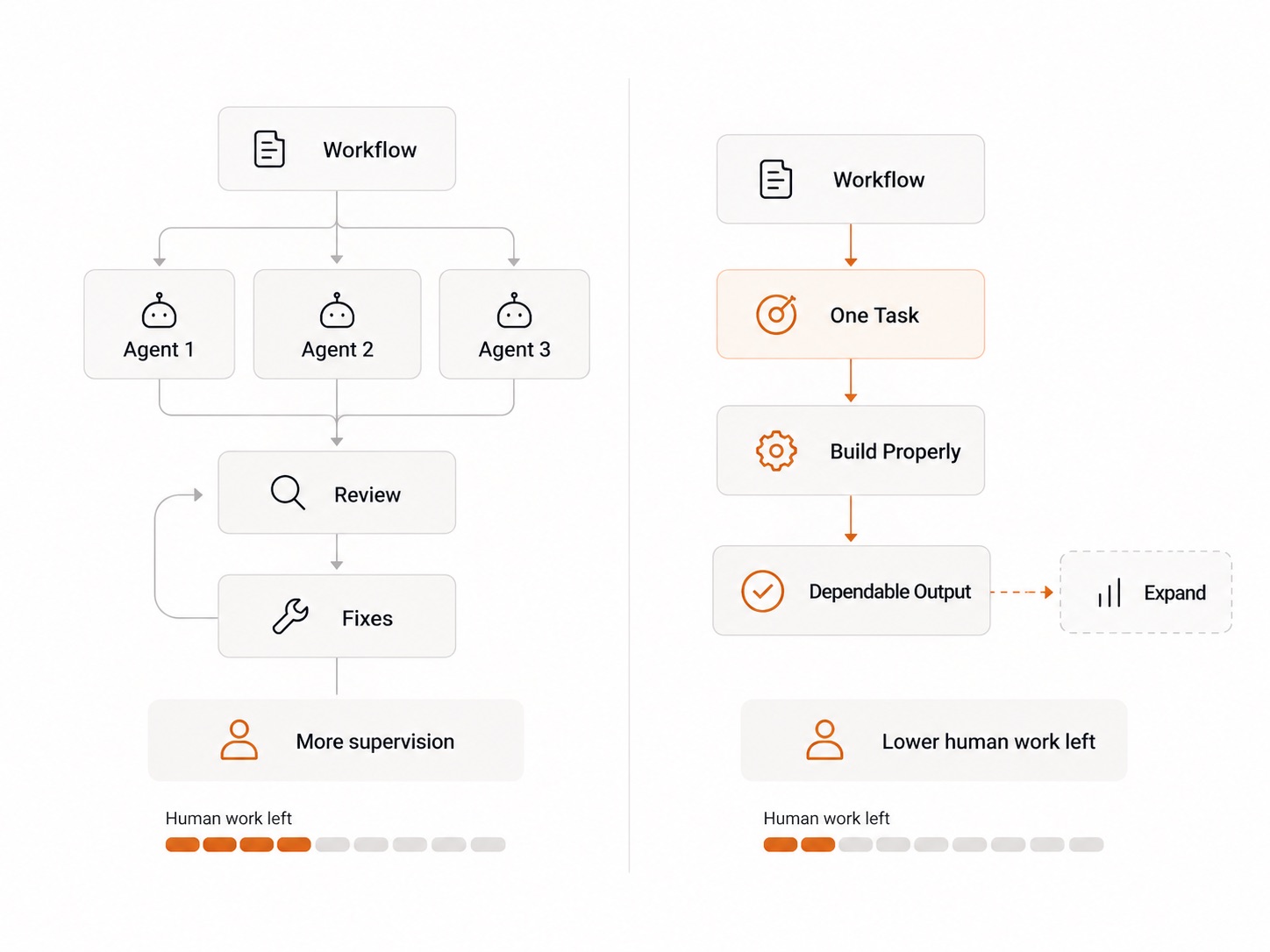
A complex AI workflow comes with more than the promise of automatic work. It introduces decisions about instructions, handoffs, exceptions, review, and what happens when the output is wrong.
Those decisions belong in your business case from the beginning.
If your system needs someone to keep checking whether it followed instructions, that checking is part of the workload. So is correcting its output. So is tracing where an error entered the chain.
An agent setup can look impressive while leaving your business with substantial supervision. That trade deserves a hard look before you commit to the build.
The useful measure is the work left for a person to do once the system has run.
A narrower task gives you a clearer way to judge that. You can define its boundaries, inspect its output, and decide whether the result is useful without evaluating an entire network of activity.
Key Point: Complexity brings overhead. Before you build wide, measure how much human work remains after the system runs.
Why Agent Projects Lose Momentum
Agent projects often stall before they become dependable parts of a business. Instructions sound clear and still leave important decisions unresolved. Results read well while missing a requirement. A workflow can reach its final step without producing something your business should actually use.
These are practical risks worth taking seriously, even when the underlying technology is capable.
There is also a difference between getting a task right once and being willing to rely on it week after week. A business needs more than an encouraging demo. It needs work that meets a standard under real conditions.
The way to reduce that risk is to reduce what the system must handle at first. Give it a clear job, define an acceptable result, and make failure visible. A smaller project can still demand serious thought. Narrowing the scope makes that thought easier to apply.
Key Point: Reliability is earned through repetition under real conditions, not through a successful first run.
How to Find the Workflow Taking the Most Time
Start with the work already happening.
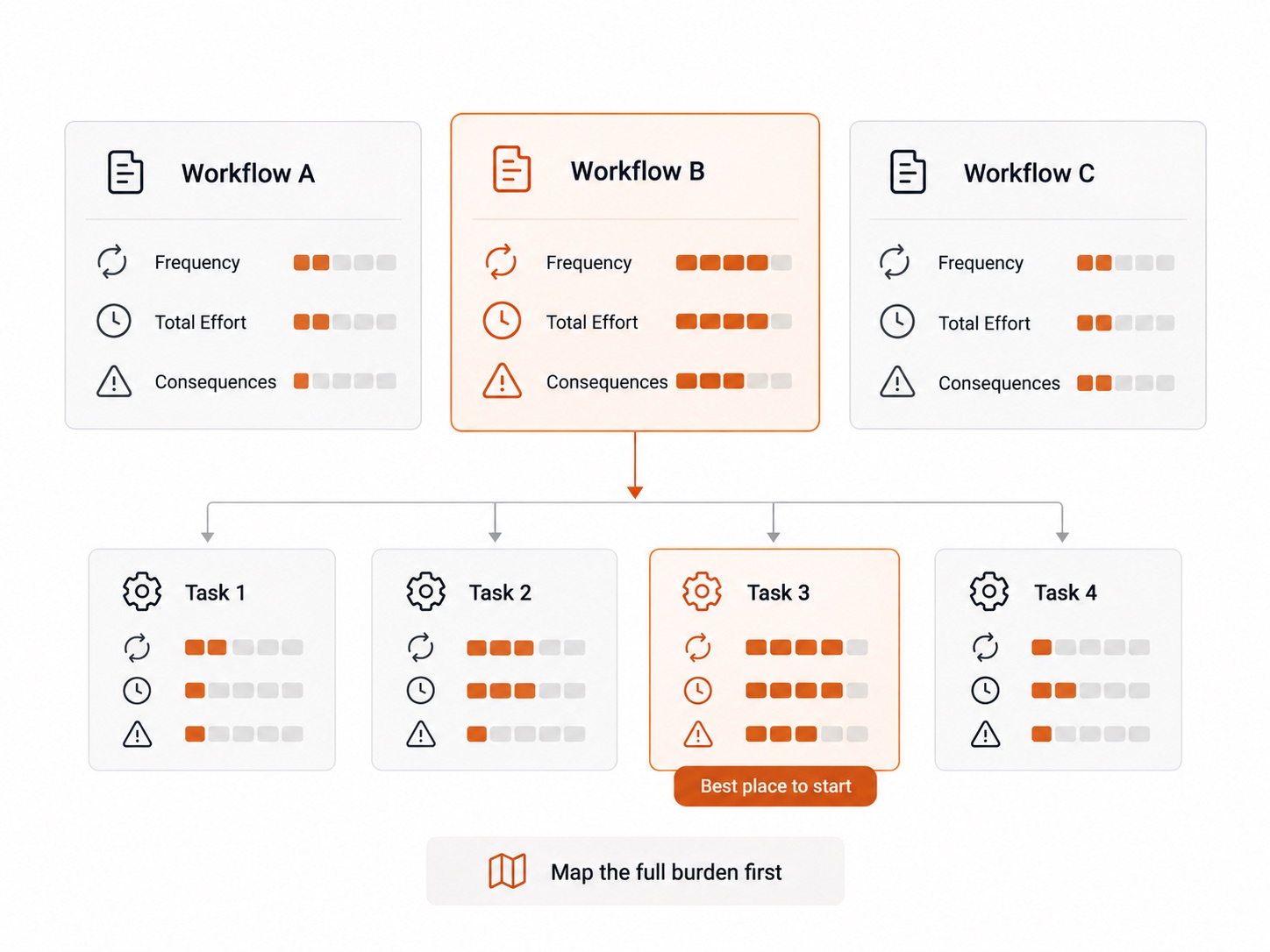
Look for the workflow consuming the largest amount of recurring human time. Include the effort around the obvious task: preparation, checking, corrections, and the follow-up needed to actually finish it. Understand the full burden before choosing what to change.
A useful assessment covers three things:
-
Frequency. How often does this workflow happen?
-
Total effort. How much human work does it take from start to finish?
-
Consequences. What happens when the work is late or wrong?
Use the most time-heavy workflow as your starting point for diagnosis. Then examine which part is suitable for a bounded improvement.
The largest workflow usually contains several different kinds of work. Some parts follow stable rules. Others require judgment your business has never made explicit. You do not need to automate the whole workflow to make progress. Choosing one task within it lets you address a real burden while keeping the first build manageable.
Key Point: The best starting task is hidden inside the workflow taking the most recurring time. Map the full burden first, then choose.
How to Choose a Task with a Clear Finish
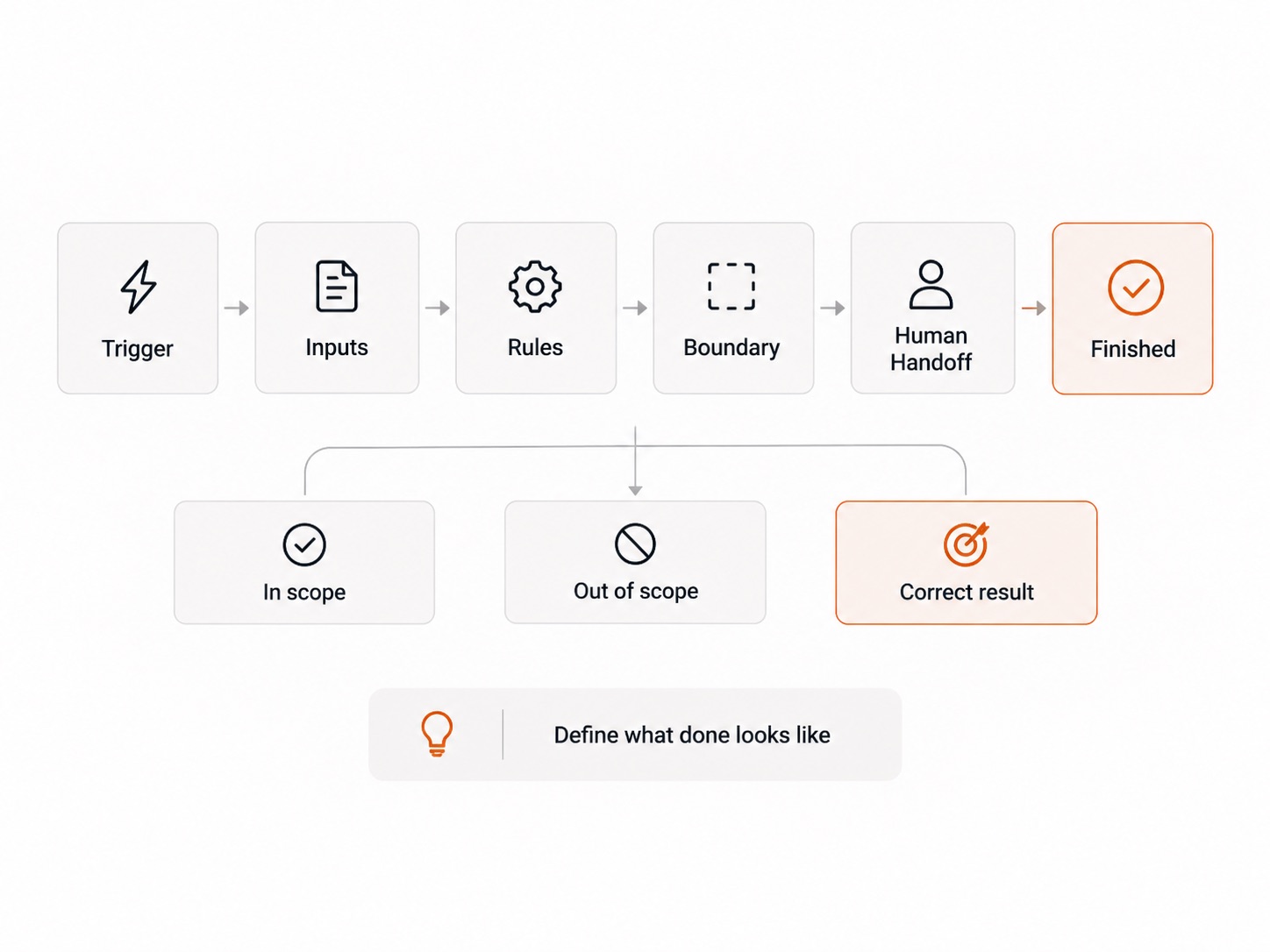
A task is ready for automation when you can explain what it receives, what it must do, and what a correct result looks like. If those answers are vague, clarify them before building.
Write down:
-
What starts the task.
-
What information it needs.
-
Which rules the result must satisfy.
-
What falls outside its scope.
-
When a person needs to take over.
-
What counts as finished.
This is useful even if the eventual solution uses very little AI. It surfaces decisions that may otherwise remain hidden inside someone’s understanding of the job. It also gives the build a boundary.
Without that boundary, a modest automation can turn into an attempt to handle every adjacent task. Each addition introduces something else to explain, test, and maintain.
For the first version, be willing to leave related work alone. A clearly finished task is a stronger foundation than several partially handled ones.
Key Point: Define finish before you start. A task without a clear endpoint keeps expanding and rarely becomes dependable.
A Modest Example with a Clear Result
One recent project involved automating vendor pricing and inventory updates. Previously a manual spreadsheet job. Now it takes a few minutes.
That is the result. It does not claim a dramatic savings figure or tell you how long the old process took. What makes it worth referencing here is the scope: one defined, recurring piece of work with a clear description of how quickly it now runs.
An automation project can be worth doing without becoming a large agent system. The technology used to handle a task is a separate decision, made after the task is understood.
Key Point: A well-scoped, boring automation is often worth more than a large agent system that needs constant supervision.
How to Build the Task Properly
Starting small should never mean accepting unreliable work.
A narrow task deserves clear standards because the goal is to make it dependable. Settle those standards before expanding scope.
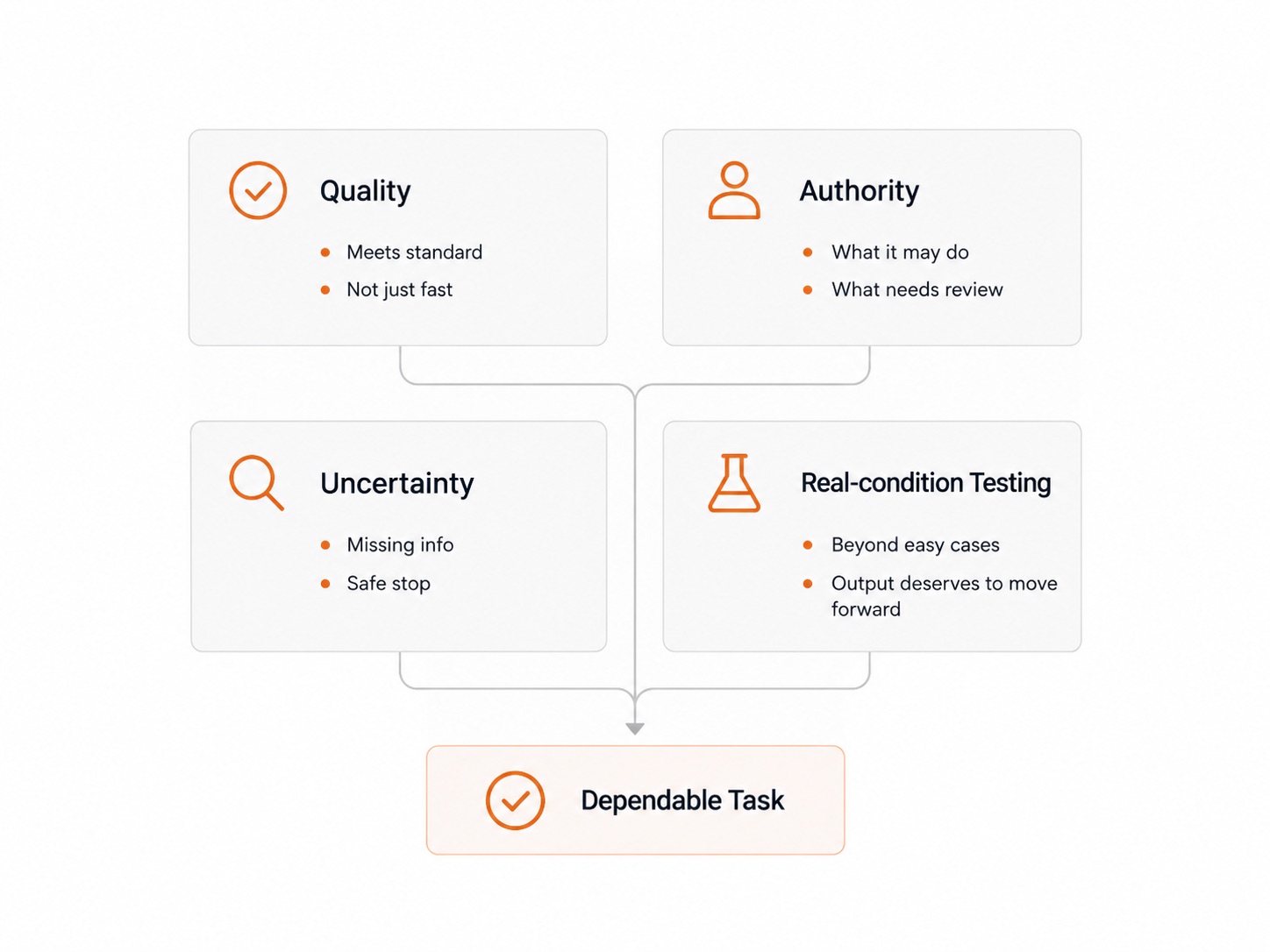
Define Quality Before Judging Speed
Write down what the result must get right. Include the instructions it must follow, the information it must preserve, and the conditions that would make the output unusable.
Speed matters only after the result meets that standard. A fast output that needs substantial repair has left a large part of the task unfinished.
Keep Authority Within the Task’s Boundaries
Decide what the system may do on its own and what requires review. The right boundary depends on the consequences of a mistake. Work with costly or hard-to-reverse consequences deserves more caution.
There is no need to make a system fully autonomous to justify using it. Human review can be a deliberate part of a useful process.
Make Uncertainty Visible
Define what should happen when required information is missing, instructions conflict, or the system cannot produce an acceptable result. A safe stopping point is a valid outcome.
The person reviewing the work should be able to tell when the task needs attention. A polished result should never substitute for evidence that requirements were met.
Test Beyond the Easiest Run
Evaluate the task under the conditions it actually needs to handle, including the limits you have identified. Check instruction-following and output quality separately from whether the workflow completed.
Completion tells you the process reached an endpoint. Evaluation tells you whether the resulting work deserves to move forward.
Key Point: Quality, authority, uncertainty handling, and real-condition testing are the four things that make a narrow task actually dependable.
How to Count the Work That Remains
Once the task runs, assess the whole process again.
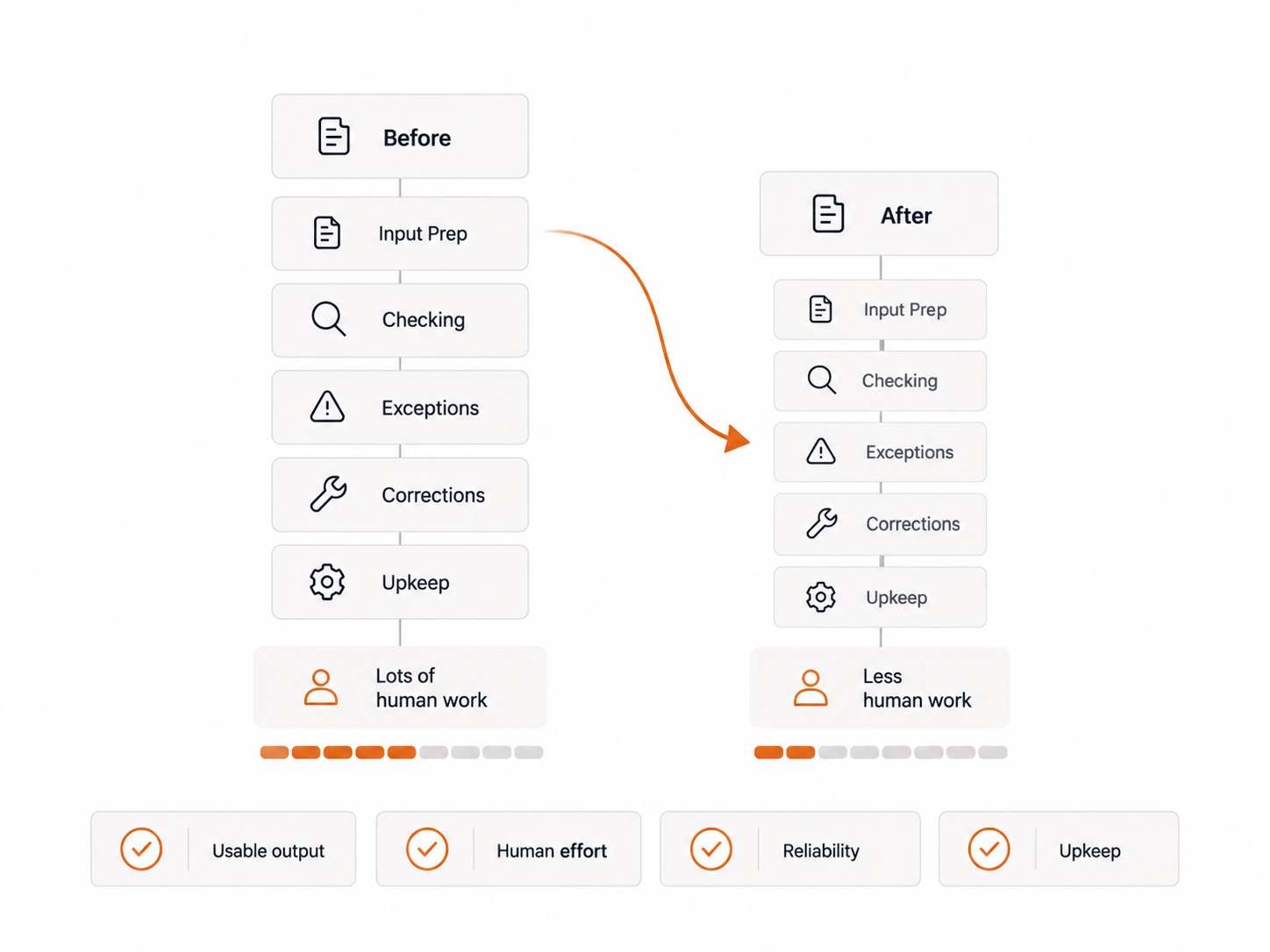
Include the time spent preparing inputs, checking results, resolving exceptions, correcting mistakes, and keeping the automation useful. This is where a practical judgment becomes possible: has the build meaningfully reduced the burden at an acceptable level of quality and risk?
Keep the evaluation simple:
-
Usable output. Does the result meet the agreed standard?
-
Human effort. How much work remains before the task is genuinely finished?
-
Reliability. Are failures visible and manageable?
-
Upkeep. Is the ongoing attention proportionate to the value?
These questions give you a basis for deciding whether to improve the current task, leave it as it is, or move to the next one. Expanding the system before answering them makes it harder to know what is actually working.
Key Point: Post-build evaluation is where you find out if the automation actually helped. Skip it and you’re flying blind on the next decision.
How to Let Complexity Earn Its Place
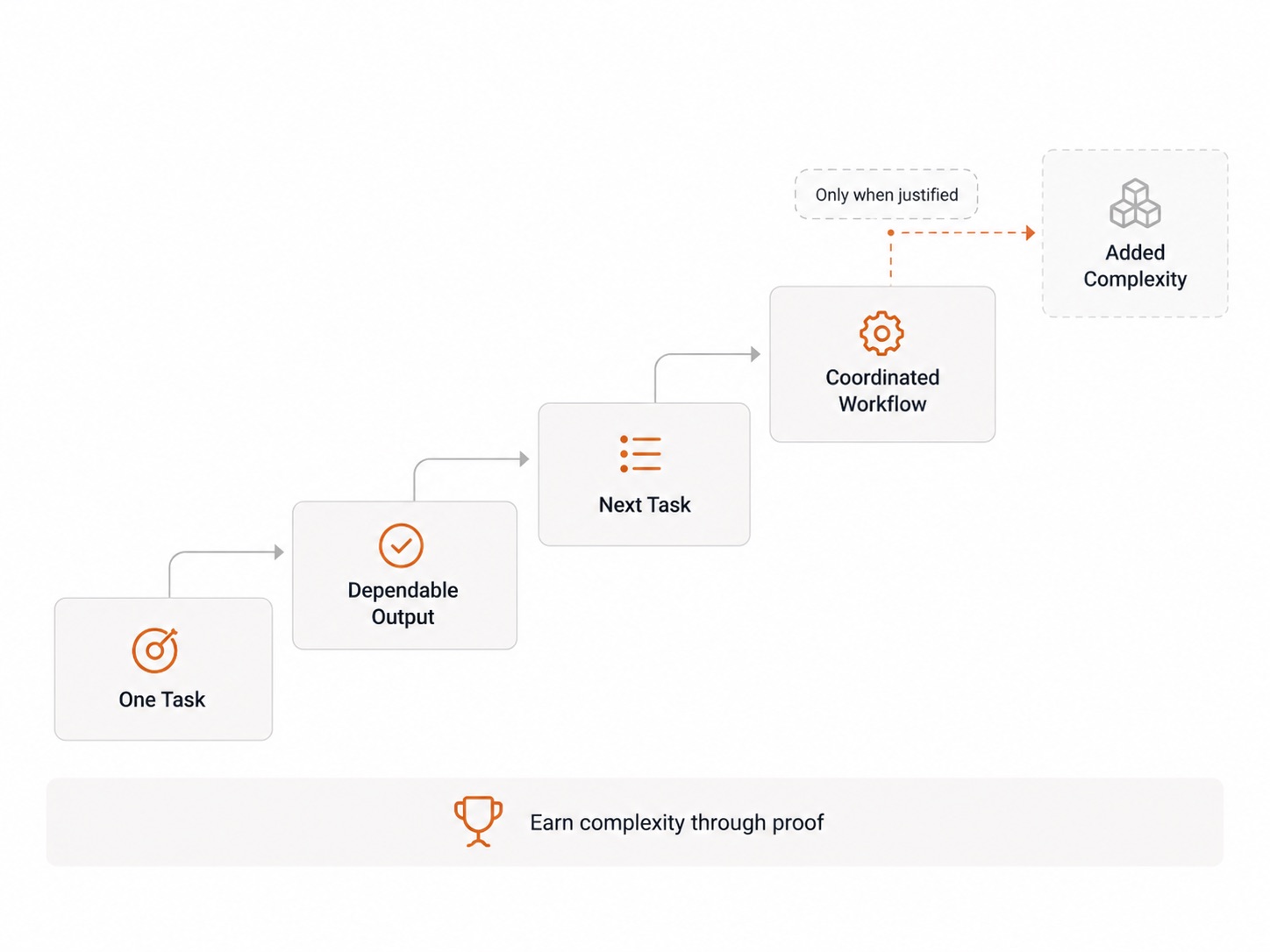
There are real reasons to build more complex AI workflows. Some work requires several coordinated steps, and some tasks justify a degree of autonomy.
But complexity should answer a demonstrated need.
Before adding another agent, identify the specific responsibility it will carry. Explain why the existing approach cannot handle that responsibility adequately, and how you will know whether the addition helps. If that case is weak, keep the system smaller.
For a business beginning this work, a well-defined task offers enough to learn: how to describe the job, set a quality standard, handle exceptions, and measure the human effort that remains. That is a substantial foundation.
The sensible sequence is to identify the workflow consuming the most time, choose one task within it, and build until its output is dependable. Broader scope belongs after that proof.
A fleet of agents can wait. The recurring work already taking up your week gives the business a clearer place to begin.
Not sure which workflow to start with? The free growth diagnostic shows where your business is losing the most time. If you already know the task, see how we build AI automation. For the bigger picture, read why AI makes human thinking more valuable.
Key Point: Complexity belongs after you have proven a narrow task works. Earn it, do not assume it.
Frequently Asked Questions
Do I need AI agents to automate business workflows?
No. Many recurring tasks can be handled with straightforward automation. AI agents introduce coordination overhead that often is not justified until simpler automation has been built and proven first.
What is the best workflow to automate first?
The workflow consuming the most recurring human time. Map the full effort including preparation, checking, and corrections, then identify a single task within it that has a clear finish.
How do I know if a task is ready for automation?
You can define what starts the task, what information it needs, which rules the result must satisfy, and what counts as finished. If any of those are vague, clarify them before building.
What makes an AI agent project fail?
Ambiguous instructions, undefined quality standards, and scope creep are the most common causes. Projects also stall when failure is invisible and correction becomes someone’s full-time job.
How do I measure whether an automation actually helped?
Count the total human work remaining after the system runs. Include input preparation, output checking, exception handling, and ongoing upkeep. Compare that to the effort before the build.
When does it make sense to add more agents?
When you can name the specific responsibility the new agent will carry, explain why the existing approach cannot handle it, and describe how you will measure whether the addition helps.
Should I automate the whole workflow or just part of it?
Start with one task inside the workflow. Automating the whole thing at once makes it harder to isolate what is working and what is not. A dependable single task is a stronger foundation.
What counts as a good result from an automation build?
The output meets the agreed quality standard, the human effort remaining is meaningfully reduced, failures are visible and manageable, and the ongoing upkeep is proportionate to the value delivered.
Key Takeaways
-
Identify the workflow consuming the most recurring human time before choosing what to automate.
-
Pick one task within that workflow. Define what it receives, what it does, and what a correct result looks like before building.
-
AI agents introduce coordination overhead. That overhead is part of the cost and belongs in the business case from the start.
-
Build until the output is dependable, then evaluate. Count the total human effort remaining after the system runs.
-
Complexity should answer a demonstrated need. Earn it through a proven narrow task first.
-
A well-scoped, dependable automation built on a single task is worth more than a large agent system that needs constant supervision.
-
The recurring work already taking up your week is a clearer and more honest place to begin than any exciting AI use case.