



AI is flooding the market with generic content. This makes authentic human insight scarce and valuable. Businesses competing on AI efficiency get commoditized. Those offering genuine expertise and personal care command premium prices.
Core Answer:
-
AI abundance creates human scarcity because generic content becomes worthless when everyone has access to the same tools
-
Human expertise becomes a luxury good when AI handles mass-market solutions cheaply
-
Businesses operating from purpose instead of tactics become irreplaceable because nobody else has your exact mix of experience and worldview
-
Genuine care and personal investment can’t be automated, making them increasingly valuable competitive advantages
What’s the Problem With AI-Generated Content?
Most people want AI to do all their thinking for them.
I see it everywhere. LinkedIn posts sound identical. Marketing copy has the telltale AI structure. Content is correct but soulless.
When I scroll through social media now, I spot the difference instantly. Did someone use AI to polish their own ideas? Or did they let ChatGPT spit out generic content?
AI has a certain way of writing. You need to steer away from this.
The real value isn’t replacing human thought. It’s extracting what’s already buried in your head. Ideas you don’t even know are there.
Bottom line: AI creates generic content at scale, making authentic human perspective more scarce and therefore more valuable.
How Does AI Create Value for Human Expertise?
Mass production made everything cheaper.
Handcrafted became luxury.
The same thing is happening with thinking and strategy. Generic AI thinking becomes mass production. Authentic human insight becomes the luxury good.
The Real Use of AI Tools
When you have 17+ years of experience, insights get buried deep. They need the right questions to surface.
AI becomes an interviewer. It digs deeper and pulls out your unique perspective.
The gold isn’t having a machine think for you. It’s having a machine help you think better. Help you capture thoughts you’d never organize on your own.
The shift: AI tools work best when extracting existing human expertise, not replacing human thought entirely.
Why Does Personal Care Beat Automation?
Here’s something I took for granted: I care.
I spend way too much time on client tasks other agencies overlook. Lower-paying clients get more attention than my margins allow.
Most agencies don’t operate this way. They’re chasing monthly revenue and new clients.
What Automation Can’t Replace
When everyone else scales with AI and automation, they lose the human touch driving results.
My clients know I’ll dig into problems personally. I’ll spend three hours thinking through a positioning problem because I want to see them win.
You can’t automate this level of investment in client success.
Clients feel the difference immediately.
The edge: Personal investment in client outcomes becomes more valuable as competitors automate and scale, because genuine care can’t be replicated by systems.
What Does the Future Market Look Like?
We’re heading toward a split market.
Two Tiers Emerging
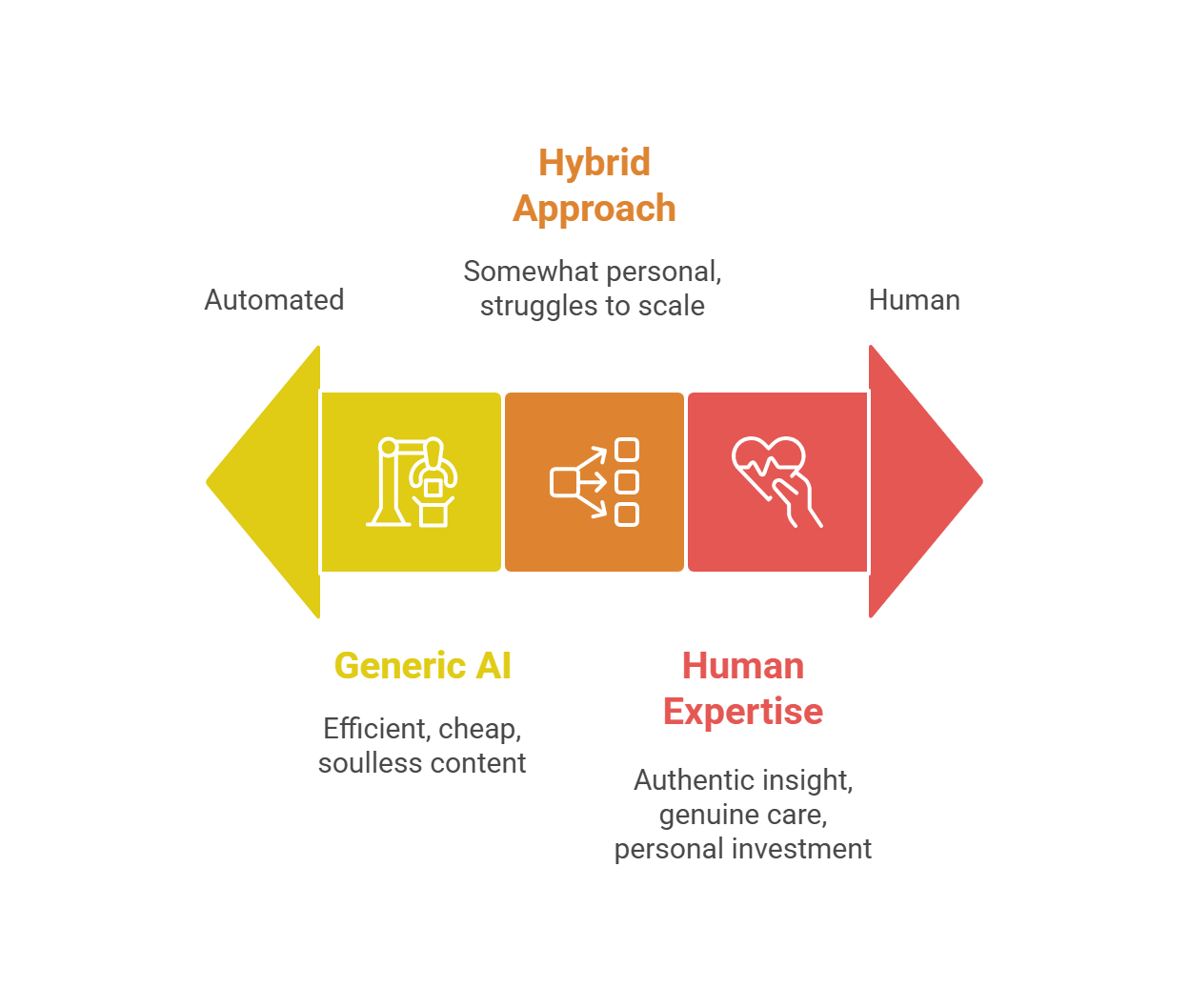
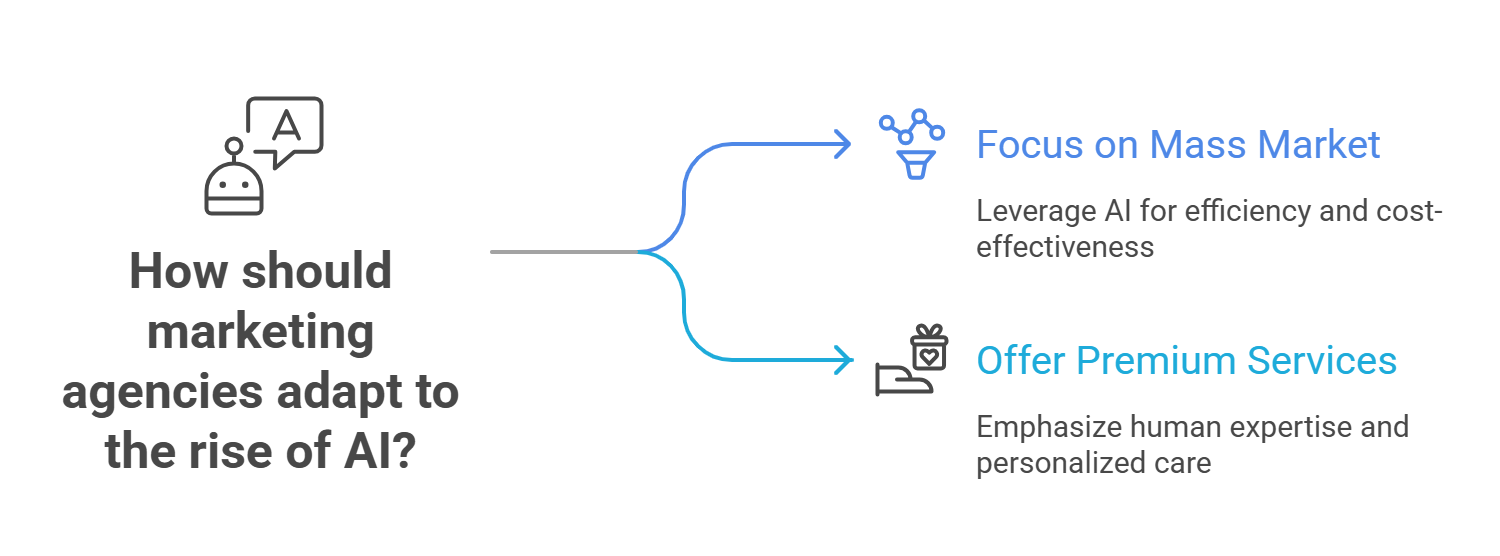
Mass Market Tier: AI handles everything fast and cheap.
Premium Tier: Human expertise, genuine care, and personal investment become luxury services.
Why People Pay Premium Prices
Someone gets decent marketing advice from ChatGPT for free. Why pay thousands?
Because you bring something AI can’t replicate. Seventeen years of making mistakes. Learning what works. Developing methodology rooted in your worldview.
AI floods the market with “good enough” solutions. Therefore, people pay premium for “this is exactly what I needed and nobody else has this perspective.”
Market reality: The middle ground (agencies trying to be personal while scaling efficiently) gets squeezed out, leaving only cheap AI solutions and premium human expertise.
Purpose vs. Niche: Which Wins?
Here’s the insight: I don’t need a niche.
For years, I tried fitting into marketing boxes. “We serve contractors” or “we’re the coaching agency.”
When I kept getting pushed on why I work with such different types of businesses, it became clear.
Why Purpose Beats Industry Focus
If you’re walking in your purpose and not someone else’s, nobody competes with you directly.
My niche isn’t an industry. It’s working with people who refuse surface-level work. People who want to build legacy, not revenue alone.
Commodity vs. Irreplaceable
Pick a vertical: You compete on tactics and industry knowledge. Anyone learns home services or coaching strategies.
Operate from purpose: Your combination of experience, values, and approach becomes irreplaceable. Nobody else has your exact mix.
The vertical approach makes you a commodity. The purpose approach makes you irreplaceable.
Strategic insight: Operating from core purpose creates defensibility because your unique worldview and methodology can’t be replicated, while industry-specific tactics become commoditized.
How to Stay Competitive: The Discipline Advantage
The question: do business owners have discipline to stay small and focused when the market tells them to scale and automate?
Most won’t.
This makes it an even bigger opportunity for those who do.
Scaling Down vs. Scaling Up
Other agencies brag about how many clients they handle with their new AI systems.
We brag about how few clients we work with and how much attention each one gets.
Everyone’s trying to do more with less. We’re doing less with more.
What Clients Pay Premium For
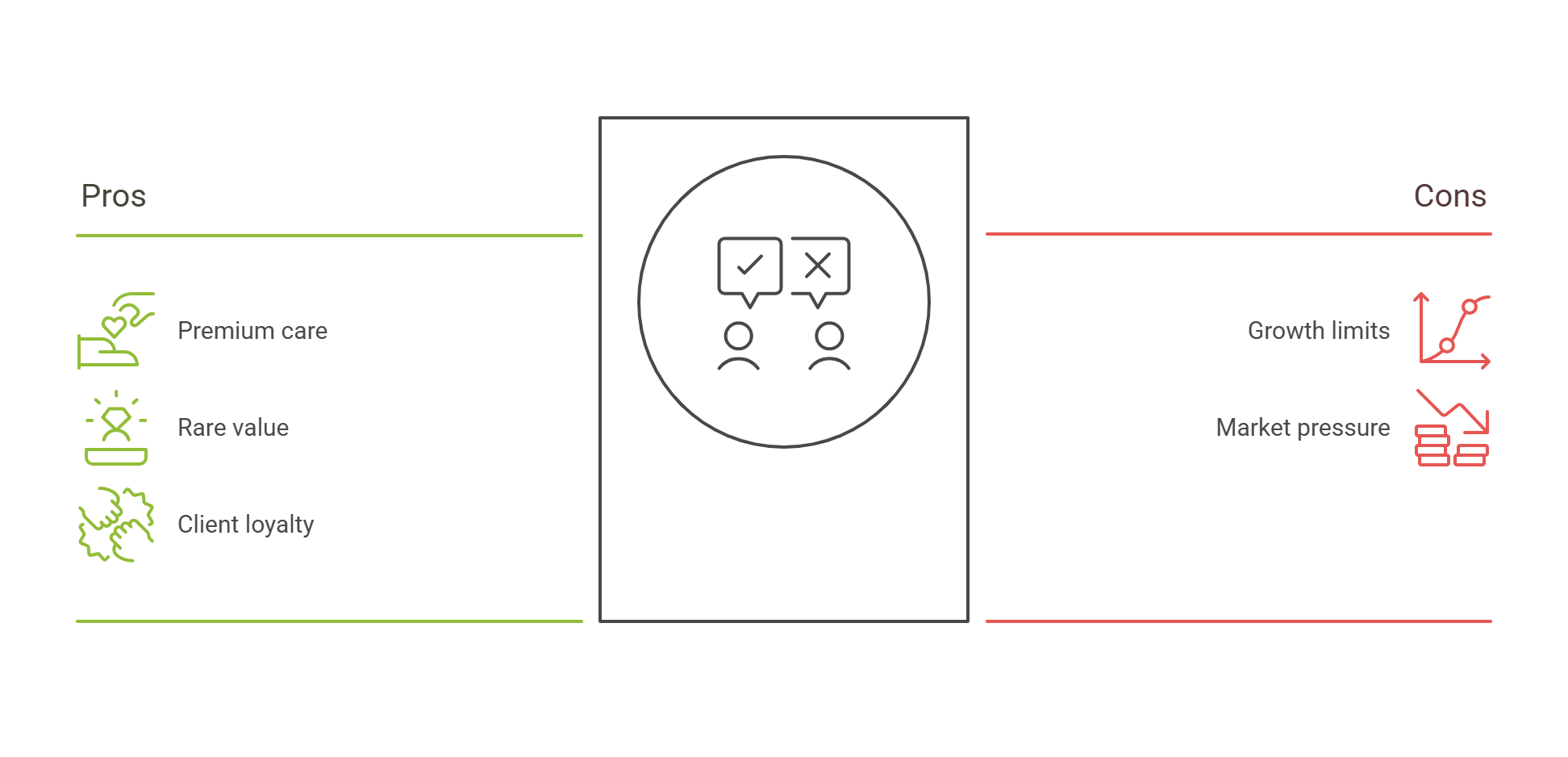
Clients pay premium for this level of care. They’ve been burned by “efficient” agencies not caring about results.
As AI gets better and more widespread, the gap between automated service and genuine human care widens.
What you can’t commoditize is someone who loses sleep over your business success.
This becomes more rare and more valuable.
Competitive reality: The discipline to stay focused on fewer clients with deeper care becomes a bigger advantage as more competitors choose automation and scale.
Frequently Asked Questions
Will AI replace human expertise in business services?
No. AI replaces commodity work and generic advice. Human expertise becomes more valuable because AI can’t replicate 17+ years of experience, unique methodology, or genuine personal investment in client success. The more AI handles basic tasks, the more people pay premium for irreplaceable human insight.
How do I compete when AI makes my services cheaper?
Stop competing on price or efficiency. Compete on your unique perspective and methodology. Operate from your core purpose instead of copying industry tactics. When you bring something nobody else has (your exact mix of experience, values, and approach), price becomes secondary.
Should I specialize in a specific industry or niche?
Industry specialization makes you compete on tactics anyone learns. Purpose-driven positioning makes you irreplaceable. Your niche should be the type of client who aligns with your values and approach, not a vertical market where you compete on commoditized knowledge.
How do I use AI without losing my authentic voice?
Use AI to extract and organize your existing thoughts, not replace them. AI works best as an interviewer asking the right questions to surface insights buried in your experience. Polish your own ideas with AI tools instead of letting AI generate generic content.
What’s the difference between AI-generated and human-crafted content?
AI-generated content follows predictable structures and sounds identical across sources. Human-crafted content reflects unique perspective, specific experience, and authentic voice. The difference is instantly recognizable because AI optimizes for correctness while humans create from genuine expertise.
How many clients should I work with if I want to compete on care?
Work with as few clients as your business model allows while staying profitable. The goal is depth of service, not breadth. When you invest deeply in fewer clients, you deliver better results and justify premium pricing. Clients feel the difference.
Is the two-tier market permanent or temporary?
Permanent and widening. As AI gets better, technical execution becomes cheaper and more accessible. This makes genuine human expertise, personal care, and unique methodology rare. The middle ground (somewhat personal, somewhat efficient) gets eliminated. You’re left with cheap AI solutions and premium human services.
What happens to agencies trying to scale with AI?
They lose the human touch driving results. Clients notice when they’re treated like account numbers instead of partners. As more agencies automate, the ones offering genuine personal investment become more valuable. Agencies optimizing for efficiency compete in a race to the bottom.
Key Takeaways
-
AI abundance creates human scarcity: Generic AI-generated content makes authentic human insight more scarce and valuable
-
Use AI to extract, not replace: The best AI use extracts existing expertise from your head instead of generating generic content
-
Personal care can’t be automated: Genuine investment in client success becomes a competitive advantage as competitors automate and scale
-
Purpose beats niche: Operating from core purpose makes you irreplaceable, while industry specialization makes you a commodity competing on tactics
-
Two-tier market emerging: Mass-market AI services at the bottom, premium human expertise at the top, with the middle ground disappearing
-
Scale down, not up: Working with fewer clients and investing deeply creates more value and justifies premium pricing
-
Gap widening: As AI improves, the difference between automated service and genuine human care becomes more pronounced and valuable