



Positioning isn’t discovered through workshops. It’s built through operational decisions about who you serve, what you refuse, and what you’re willing to sacrifice. Stop trying to find what makes you different. Start making choices that create difference.
-
Positioning comes from operational decisions, not workshop discoveries.
-
Three critical choices separate memorable brands: serve one customer well, show up consistently, pivot when needed.
-
Your differentiation emerges from choices that cost you something.
-
Better messaging won’t fix a foundation problem.
Why Do Founders Struggle With Positioning?
Every agency asks this question.
Every founder gives the same useless answer.
“We care more.” “We’re strategic.” “We focus on results.”
The problem isn’t founders don’t know the answer. The problem is they’re asking the wrong question.
You can’t discover positioning that doesn’t exist.
Bottom line: The standard positioning workshop assumes your differentiation already exists, buried under bad messaging. Positioning gets built through decisions, not discovered through questions.
Why Don’t Positioning Workshops Work?
I stopped asking “what makes you different” three years ago.
Not because the question is bad. Because the assumption behind the question is wrong.
The assumption is this: your differentiation already exists somewhere inside your business, buried under bad messaging. You need the right facilitator asking the right questions to dig out what’s already there.
That’s not how it works.
Internal positioning development produces vague positioning. Office politics and internal biases influence internal teams.
You’re not discovering gold. You’re manufacturing consensus.
What this means: Workshops generate alignment on what you already do. They don’t create the operational foundation producing differentiation.
How Does Positioning Get Built?
Here’s what I see when I look at founders who plateau between $300k and $3M…
They waste resources on disconnected tactics. They rely on ChatGPT for business strategy. They’re recovering from past agency failures.
They want more leads.
More leads don’t fix a foundation problem.
Strategic positioning reflects choices a company makes about the kind of value it will create and how that value will be created differently than rivals.
Notice the word: choices.
Not discoveries. Not insights. Not workshop breakthroughs.
Choices.
What this means: Positioning emerges from strategic choices about who you serve and how you operate. These choices get made in your business operations, not in your marketing meetings.
What Does Real Positioning Work Look Like?
Positioning emerges from operational decisions you make every day.
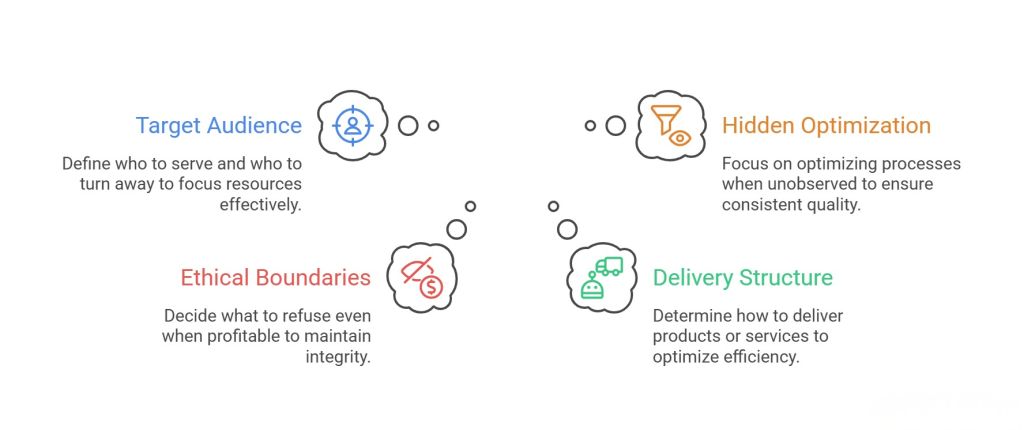
Who you serve. Who you turn away. What you refuse to do even when it’s profitable. How you structure your delivery. What you optimize for when nobody’s watching.
These decisions accumulate. They form patterns. Those patterns become your positioning.
You get to refine positioning in 20 minutes once the foundation exists. You can’t discover what isn’t there.
I learned this the hard way.
I used to ask founders about their origin story. What painful moment made them realize they needed to build this business. What led them to start.
Good questions. They work when the founder has made enough operational decisions to have a story worth telling.
Most haven’t.
What this means: Your positioning story emerges from the pattern of hard choices you’ve made. Without those choices, there’s no story to tell.
What Do Positioning Decisions Look Like in Practice?
Let me show you what I mean.
A construction company came to me. They wanted better positioning. They sounded like every other contractor in their market.
I didn’t ask what made them different.
I asked what they decided to do when a client wanted them to cut corners to hit a deadline.
I asked what happened when they had to choose between taking on a profitable project that didn’t align with their standards or turning it down.
I asked how they structured their team when they could have hired cheaper labor.
Those decisions told me everything.
They decided to invest in a scalable system instead of prioritizing speed at launch. They decided to showcase lifestyle over features in their marketing. They decided to filter leads automatically through their system design.
That’s positioning.
Not because they workshopped the positioning. Because they built positioning through successive choices requiring sacrifice.
What Three Decisions Separate Memorable Brands from Forgettable Ones?
I’ve worked with dozens of founders at this point.
The memorable ones make three specific decisions that forgettable ones avoid.
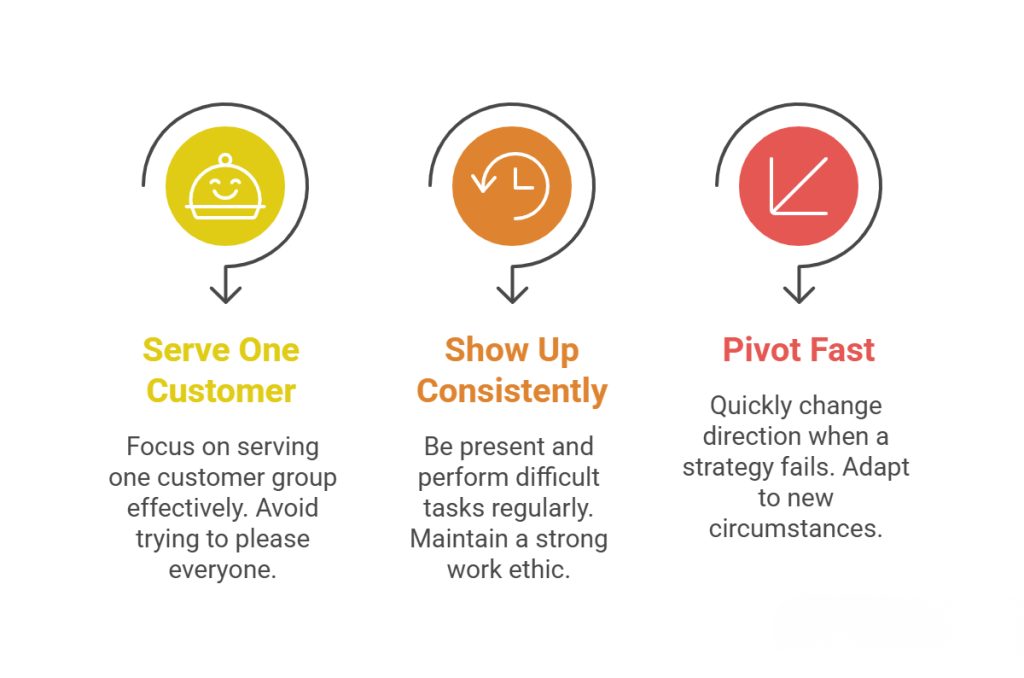
Decision 1: Serve One Customer Well Instead of Trying to Serve Everyone
When you spread yourself thin across too many personas, your marketing becomes generic. When you speak to one specific person, your marketing becomes direct and concise.
That person reads your marketing and sees themselves in that story.
If the message is too broad, they can’t relate. They pass the message up.
Decision 2: Show Up Consistently and Do the Hard Things
Not when the work is convenient.
Showing up when it’s boring, when nobody’s watching, when the results aren’t immediate.
Consistency is the real work.
Decision 3: Pivot Fast When Something Isn’t Working
They’re not stuck in one lane. They’re not married to their assumptions.
When the market tells them something different than what they believed, they listen. They adapt. They rebuild.
That’s not a workshop exercise. That’s operational reality.
What this means: These three decisions require sacrifice. They cost you something. Because of the cost, they create differentiation.
Why Does the Standard Playbook Fail?
Differentiation requires all-in commitment. You can’t delegate differentiation to low-ranking marketers. It’s not a tactic somebody ships. It’s not a line of copy one writes.
But most agencies treat differentiation exactly this way.
They run a positioning workshop. They deliver a messaging framework. They hand you a document.
Then they wonder why it doesn’t work.
It doesn’t work because services don’t differentiate. Services don’t speak. Belief speaks. Point of view speaks. Narrative speaks.
And you can’t manufacture belief in a conference room.
You build it through decisions that cost you something.
What this means: Positioning workshops fail because they treat differentiation as a messaging problem when differentiation is an operational problem.
Why Are Most Companies the Same?
Sameness is the default for most companies today.
Companies are too similar in their offers, poorly differentiated in their branding, indistinct in their communication. Most offer no meaningful differentiation and say the same things.
You know why?
Because they’re all using the same playbook. They’re all asking the same questions. They’re all trying to discover something outside themselves.
The companies that stand out aren’t asking questions at all.
They’re making decisions.
What this means: Sameness comes from following the same playbook. Differentiation comes from making different operational choices.
What Should You Do Next?
If you’re stuck at a revenue ceiling, the answer isn’t better messaging.
The answer is better decisions.
Stop trying to articulate what makes you different. Start making choices that create difference.
Who are you willing to turn away? What work are you willing to refuse? What standards are you willing to enforce even when it costs you money?
Those decisions accumulate into positioning.
Not in a workshop. Not in a document. In the market.
Where the work matters.
Common Questions About Building Positioning
How long does building positioning through operational decisions take?
Positioning builds over months, not days. Each decision you make adds to the pattern. You’ll start seeing clarity after three to six months of consistent choices about who you serve and what you refuse.
Can I change my positioning once I’ve built positioning?
Yes. Positioning evolves as your business evolves. When you make different operational decisions, your positioning shifts. The key is making deliberate changes rather than random pivots.
What if I’ve already done a positioning workshop?
Use the workshop output as a hypothesis. Test the hypothesis through operational decisions. When your daily choices align with what the workshop produced, you’re building something. When they don’t, the workshop created fiction.
How do I know which customers to serve?
Look at who you’ve already served well. Who gave you the best results? Who was easiest to work with? Who referred others? The pattern tells you who to focus on.
What if refusing work means losing revenue?
Short term, yes. Long term, no. When you refuse misaligned work, you free up capacity for aligned work. The aligned work compounds into positioning. The revenue follows positioning, not the other way around.
How is this different from niche selection?
Niche selection is one decision. Positioning is the accumulation of many decisions. Your niche tells you who you serve. Your positioning tells you how you serve them differently through the operational choices you’ve made.
Do I need to hire someone to help with positioning?
You need help with clarity, not positioning. A good advisor helps you see the pattern in your decisions and articulate the pattern. They don’t create the pattern. You do through your daily operations.
What if my competitors copy my positioning?
They can copy your messaging but not your operational decisions. When your positioning comes from choices costing you something, competitors face the same cost. Most won’t pay the cost.
Key Takeaways
-
Positioning gets built through operational decisions, not discovered through workshop questions.
-
Three critical decisions create differentiation: serve one customer well, show up consistently, pivot when needed.
-
Your differentiation emerges from choices that require sacrifice and cost you something.
-
Workshops generate alignment on what you already do but don’t create operational foundation.
-
Better messaging won’t fix a foundation problem. Better decisions will.
-
Companies stay the same because they follow the same playbook. Differentiation comes from different operational choices.
-
Go make a decision that costs you something. That’s where your positioning lives.