



An effective brand positioning strategy requires three decisions: choose a specific customer, replace internal assumptions with market evidence, and repeat one clear position long enough to learn whether it works. The hard part is not writing the message. It is accepting the trade-offs behind it.
Core Answer:
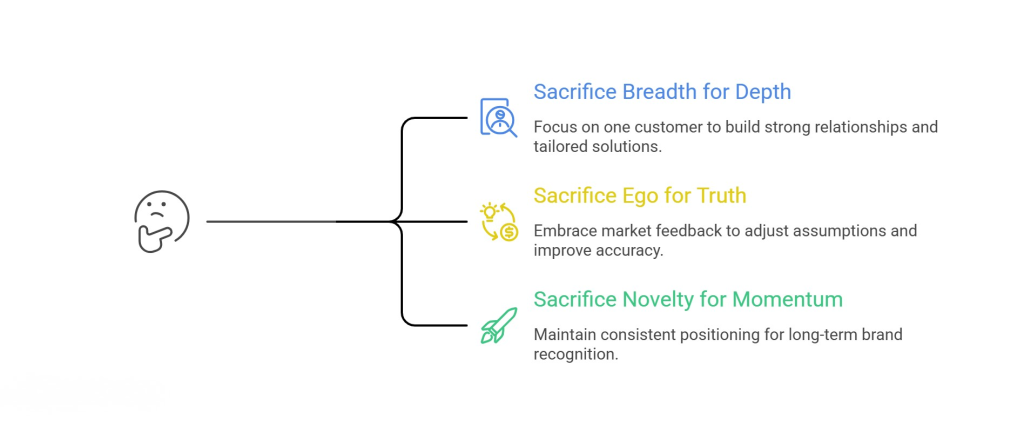
- Sacrifice breadth for depth by choosing one specific customer and saying no to everyone else
- Sacrifice ego for truth by letting go of unvalidated assumptions when market feedback contradicts them
- Sacrifice novelty for momentum by keeping the core position consistent while you test the execution
- These decisions feel impossible because they require walking away from revenue, admitting you’re wrong, and staying boring while competitors chase new tactics
I’ve worked with dozens of founders over the past few years. The pattern is clear now.
Memorable brands make three specific decisions that forgettable ones avoid. These decisions aren’t hard to execute. They’re hard to commit to because they require sacrifice.
Most founders know what would make them stand out. They won’t pull the trigger.
What Is the First Sacrifice Decision?
Choosing One Customer Over Everyone Else
When I ask founders who their ideal customer is, I get the same answer every time.
“Well, we help anyone who…” and then they list half the market.
Here is what happens in practice: when you try to mean everything, you give buyers no clear reason to choose you.
The type of audience you attract at the top of the funnel is the audience you’re closing at the bottom. If you try to attract everyone with a lead magnet that solves a broad issue, you’re speaking to a lot of people. Most of them aren’t qualified.
The more qualified your attention is at the top, the better the quality at the bottom.
I learned this the hard way.
Early on, I’d take any client who paid. The projects dragged. The results were inconsistent. I was exhausted.
Then I made the decision to serve one specific type of founder. Businesses beyond survival phase but pre-optimization. Revenue-generating but structurally reactive. The ones who built through direct effort but face replication barriers.
My marketing became direct. When that person reads my content, they see themselves in the story because it speaks to them and about them. If it’s too broad, they don’t relate.
The sacrifice: You’re saying no to revenue. You’re watching potential clients walk away because they don’t fit your buyer persona. That’s uncomfortable when you’re trying to grow.
But here’s what happens when you don’t make this sacrifice.
The reason so many companies lack differentiation is sameness. They’re too similar in their offers, poorly differentiated in their branding, and indistinct in their communication.
When you spread yourself too thin across too many personas, you compete with everyone. When you speak to one specific person, you become the obvious choice for that person.
Bottom line: Narrow focus creates competitive separation. Broad focus creates commodity competition.
What Is the Second Sacrifice Decision?
Letting Go of Unvalidated Assumptions
I’ve worked with founders who built all of their messaging and branding on assumptions. Not on the market. On what they thought should work.
When their assumptions were challenged, it was hard for them to pivot. They had a preconceived notion of how things should look and function. But when you run those things through the market and compare it to what the market wants, there’s a big gap.
The people stuck in their ways have a harder time making their marketing work because they’re not willing to adapt. They’re trying to fit everything into their branding guidelines… guidelines that were never validated to begin with.
People are afraid of change. They’re comfortable the way things are. Change creates friction and uncertainty because you’re walking into territory you haven’t walked in before.
The sacrifice: You’re admitting you were wrong. You’re throwing away work you’ve done. You’re starting over in some areas.
But the alternative is worse.
The useful signal is not whether the internal team likes the position. It is whether the right buyers understand it, repeat it back, and act on it. When those signals contradict the original assumption, the strategy needs to change.
I ask founders about their origin story now. What was the painful moment when they realized they needed to build this business? What led them to start?
That’s where authentic differentiation lives. Not in the features they built based on assumptions. In the problem they experienced that no one else was solving the right way.
When you’re willing to let go of assumptions and pivot fast based on market feedback, you differentiate yourself from the 80% who stay stuck.
Bottom line: Market feedback beats internal assumptions. Willingness to pivot creates advantage over competitors who won’t adapt.
What Is the Third Sacrifice Decision?
Consistency Over Novelty
Every founder wants the new tactic. The fresh strategy. The thing no one else is doing yet.
I get it. Consistency is boring. Showing up every single day with the same message, the same positioning, the same core offer… it feels like you’re not making progress.
But here’s what I’ve observed across dozens of clients.
The ones who win aren’t the ones with the most sophisticated tactics. They’re the ones who commit to foundation work and stick with it.
Foundation work takes repeated exposure and real feedback. A recognizable position starts to form when customers and referral partners describe the business in similar language without being prompted.
The sacrifice: You’re choosing to be boring. You’re doing the same thing while your competitors try new tactics. You’re trusting the process when you don’t see immediate results.
The data backs this up.
Differentiation requires consistency. You are not known for something if you keep changing what you stand for.
I’ve seen this play out in real time.
Founders who pivot their positioning every quarter never build momentum. Their audience is confused. Their referrals are inconsistent. Their marketing has to start from zero every time.
The founders who keep one clear position while improving how they express it give the market a chance to remember them.
Consistency without clarity wastes resources. But clarity without consistency never builds the trust you need to convert.
Bottom line: Sustained focus on one position outperforms tactical novelty. Differentiation requires showing up with the same message until the market recognizes you for it.
Why Do These Sacrifices Feel Impossible?
Here’s the thing about sacrifice.
It only feels like sacrifice when you’re making the decision.
Once you’re on the other side, you realize you didn’t lose anything. You gained focus. You gained clarity. You gained the ability to be memorable instead of forgettable.
But in the moment, these decisions are hard because they go against every instinct you have as a founder. You want to serve more people, not fewer. You want to trust your vision, not pivot based on feedback. You want to try new things, not do the same thing for months.
The founders who don’t make these sacrifices end up in the same place. They’re working harder than everyone else but getting worse results. Their positioning is unclear. Their messaging is generic. Their brand is forgettable.
The mark of a great company is that their differentiation creates trade offs that competitors will not meet.
That’s the key word. Will not.
Your competitors know these three decisions would help them. They won’t make the sacrifices required to execute them.
What Happens When You Make All Three Sacrifices?
I’ve watched this transformation happen enough times now that I predict it.
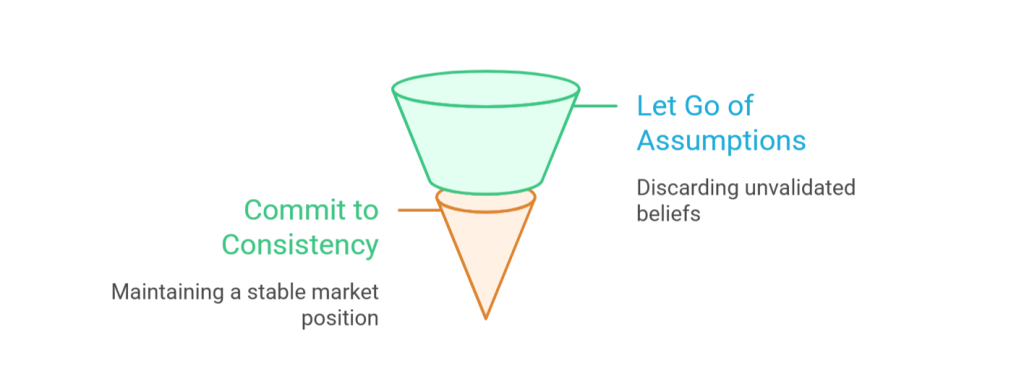
When you narrow your focus to one specific customer, let go of unvalidated assumptions, and commit to consistency, your positioning becomes easier to understand and remember.
Your marketing becomes easier because you’re speaking directly to one person. Your pivots become faster because you’re not anchored to assumptions. Your results compound because you’re building on the same foundation instead of starting over.
The clients who ghost you decided before the call. But when your positioning is clear, the right people don’t ghost. They show up ready to buy because they’ve seen themselves in your story.
That’s what memorable positioning does. It makes the decision easy for the right people and obvious for the wrong people.
How to Start Making These Sacrifices
Start with one sacrifice.
Pick the customer you’re going to serve and say no to everyone else. See what happens when you stop trying to be everything to everyone.
The other two sacrifices get easier after that.
Frequently Asked Questions
How do I know if I’m targeting too broad of an audience?
If you’re attracting leads who aren’t qualified or if your messaging feels generic when you write it, you’re too broad. The test is simple: when your ideal customer reads your content, they should see themselves specifically in the story. If they have to translate your message to fit their situation, you’re speaking too broadly.
What if I lose revenue by narrowing my focus?
You’ll lose unqualified leads that were draining your resources anyway. The revenue you gain from qualified customers who convert faster and refer others like them will outweigh the revenue you’re afraid of losing. Narrow focus increases conversion rates and customer lifetime value.
How long should I test one positioning before changing it?
Long enough to gather meaningful evidence from the market. Set a review window based on your sales cycle, then track lead quality, sales conversations, objections, and how customers describe you. Change the position when the evidence contradicts it, not because the message feels familiar to your internal team.
How do I know when to pivot based on market feedback versus stick to my vision?
Pivot when the market consistently tells you something different than what you assumed. Stick to your vision when you’re getting validation but want to change because you’re bored or distracted by new tactics. The difference is external feedback versus internal restlessness.
What’s the difference between consistency and being stuck?
Consistency means showing up with the same core positioning while improving execution. Being stuck means refusing to adapt when market feedback contradicts your assumptions. Consistency is about message repetition. Being stuck is about assumption protection.
How specific should my customer persona be?
Specific enough that when you describe them, you’re saying no to half the market. If your persona description fits most businesses in your category, it’s not specific enough. You should be able to describe their exact phase of growth, their specific challenges, and the mindset that makes them ready for your solution.
What if my competitors copy my positioning?
Let them try. Memorable positioning requires sacrifice decisions that competitors know about but won’t commit to. They won’t narrow their focus because they’re afraid of losing revenue. They won’t pivot because they’re anchored to assumptions. They won’t stay consistent because they’re chasing novelty. Your differentiation comes from trade offs they will not meet.
How do I measure if my positioning is working?
Track three things: qualified lead percentage increases, sales cycle length decreases, and referral consistency improves. When your positioning works, the right people recognize themselves faster, decide quicker, and describe your business the same way when they refer you.
Key Takeaways
- Memorable brands make three sacrifice decisions: choosing one customer over everyone else, letting go of unvalidated assumptions, and committing to consistency over novelty
- The first sacrifice requires saying no to revenue from unqualified leads to gain competitive separation in a specific niche
- The second sacrifice requires admitting you’re wrong and pivoting when market feedback contradicts your assumptions
- The third sacrifice requires keeping the core position stable while you test and improve its execution
- These decisions feel impossible because they go against founder instincts to serve more people, trust your vision, and try new things
- Your competitors know these decisions would help them but won’t make the sacrifices required to execute them
- Start with one sacrifice and the other two get easier: pick your specific customer and say no to everyone else