



Before spending money on ads, fix your marketing foundation. Businesses waste 26 to 60% of their budgets on weak positioning, unclear messaging, and generic offers. The Rooted to Rise process shows you how to audit and strengthen these three elements first, then scale with tactics.
Fix your marketing foundation with these steps:
-
Audit your positioning, messaging, and offer to find gaps
-
Clarify who you serve and why you’re different
-
Test your messaging with real people in your target market
-
Package your services around outcomes, not hours
-
Only invest in ads after your foundation is solid
Why I Built the Rooted to Rise Philosophy
I learned this the hard way.
After 20+ years in marketing and working with 50+ service businesses, I’ve seen the same pattern over and over. Business owners come to me wanting to run ads. More traffic. Better campaigns.
When I look under the hood, I find the same issues: weak positioning, confusing messaging, and offers identical to everyone else in their market.
Here’s the truth. Running better ads on a broken foundation is like turning up the volume on a bad song. You hear the problems louder.
This is the Rooted to Rise philosophy. Fix your roots first. Then rise.
Why Does Marketing Fail Before You Start?
The numbers tell the story:
Customer acquisition costs have risen 222% over the last decade. The average business loses $29 for every new customer they acquire. Companies in the highest spending quartile lose nearly $2.82 for every dollar of revenue they bring in.
This isn’t a budget problem. This is a foundation problem.
68% of businesses throw money at campaigns without results. Only 19% of marketers believe their campaigns work. Marketers waste 26% of their budgets on ineffective channels. For businesses without a structured approach, the waste climbs to 60%.
The culprit? Lack of clear strategy makes aligning activities with business goals nearly impossible. Translation: you’re guessing.
42% of marketers say audience mismatch is their most costly mistake. Beautiful ads won’t fix unclear positioning.
What This Means for You: Marketing failures happen because the foundation is broken, not because the tactics are wrong.
What Three Foundation Elements Do You Need to Fix First?
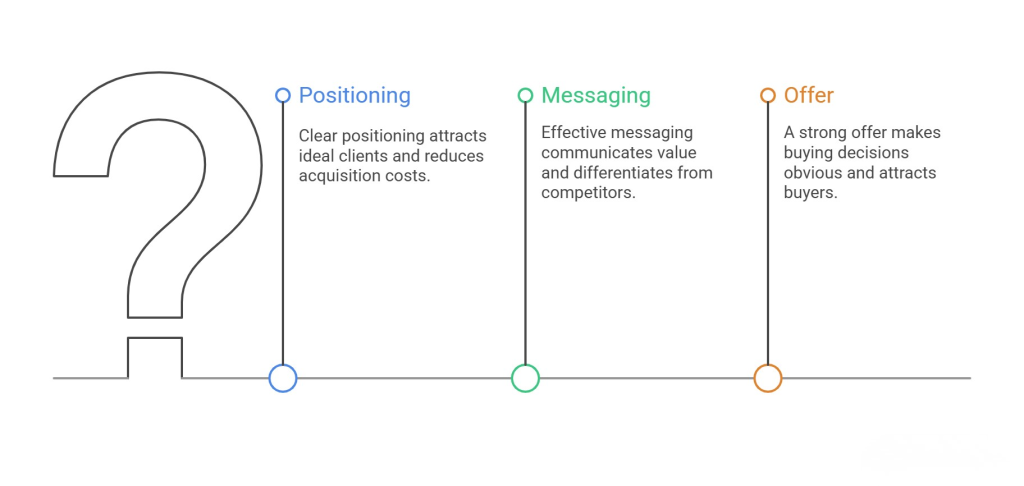
Before you spend another dollar on advertising, audit these three things:
1. Positioning: Why Should Someone Choose You?
Positioning answers one question: Why you?
Not why your service. Not why your industry. Why you specifically.
Weak positioning creates chaos:
-
You attract the wrong leads
-
Your sales conversations feel like uphill battles
-
Your customer acquisition costs climb because you’re competing on price instead of value
87% of customers choose brands sharing their beliefs. Customer-centric cultures experience 21% higher profitability. Strategic positioning reflects choices about the kind of value you create and how your value differs from competitors.
When positioning is clear, everything gets easier. You generate qualified leads. You reduce customer acquisition costs. You enable premium pricing.
When positioning is weak, you create a cycle of problems tactics won’t solve.
What This Means for You: Clear positioning is the difference between attracting ideal clients and chasing anyone with a budget.
2. Messaging: How Do You Communicate Your Value?
Your messaging is how you communicate your positioning to the market.
Broken messaging undermines everything. You have the best positioning in the world, but if you don’t articulate clearly, you lose.
Here’s what broken messaging looks like:
-
You sound like everyone else
-
Your website belongs to any of your competitors
-
Your value proposition uses generic phrases
-
Your ideal clients read your content and think “okay, but what do you do?”
Clear messaging does three things: makes your positioning obvious, speaks directly to your ideal client’s situation, and differentiates you from alternatives.
76% of consumers say poor advertising makes them avoid a brand. One clumsy campaign undoes years of goodwill. 32% of customers stop doing business with a brand they once loved after a single misstep.
Your messaging isn’t marketing copy. Your reputation is on the line.
What This Means for You: If people need to guess what you do or who you help, your messaging needs work.
3. Offer: What Are You Selling and How Do You Package It?
Your offer is what you’re selling and how you package the solution.
Service businesses often have an offer problem, not a marketing problem. They sell hours instead of outcomes. They package services the same way everyone else does. They compete on features instead of transformation.
A strong offer makes the buying decision obvious:
-
Addresses a specific problem for a specific person at a specific time
-
Removes friction from the purchase process
-
Makes the transformation clear
When your offer is weak, no amount of traffic saves you. You drown in unqualified leads. Your sales cycle drags on forever. You discount to close deals.
When your offer is strong, qualified prospects move quickly. They understand the value. They see themselves in the transformation you promise.
What This Means for You: A weak offer attracts tire kickers. A strong offer attracts buyers.
Why Do Tactics Amplify What You Already Have?
Advertising doesn’t fix problems. Advertising amplifies them.
Tactics work like a megaphone. If you have a clear, compelling message, the megaphone helps more people hear your message. If your message is confusing or weak, the megaphone broadcasts confusion to a larger audience.
This is why jumping straight to tactics fails:
-
You run ads to a website without conversions
-
You spend money driving traffic to an offer nobody wants
-
You amplify messaging without resonance
The result? Higher costs. Lower returns. Frustration.
Marketers waste 26% of their budgets on ineffective channels and strategies. The figure rises to 60% for businesses without a structured approach. The fix isn’t more tactics. The fix is better foundations.
Strategy-first beats tactics-first every time. Without strategy, your marketing becomes a series of disconnected sprints with no finish line. Your marketing and your business get out of sync.
What This Means for You: Tactics without strategy build nothing. Fix the foundation, then amplify.
How Does the Rooted to Rise Process Work?
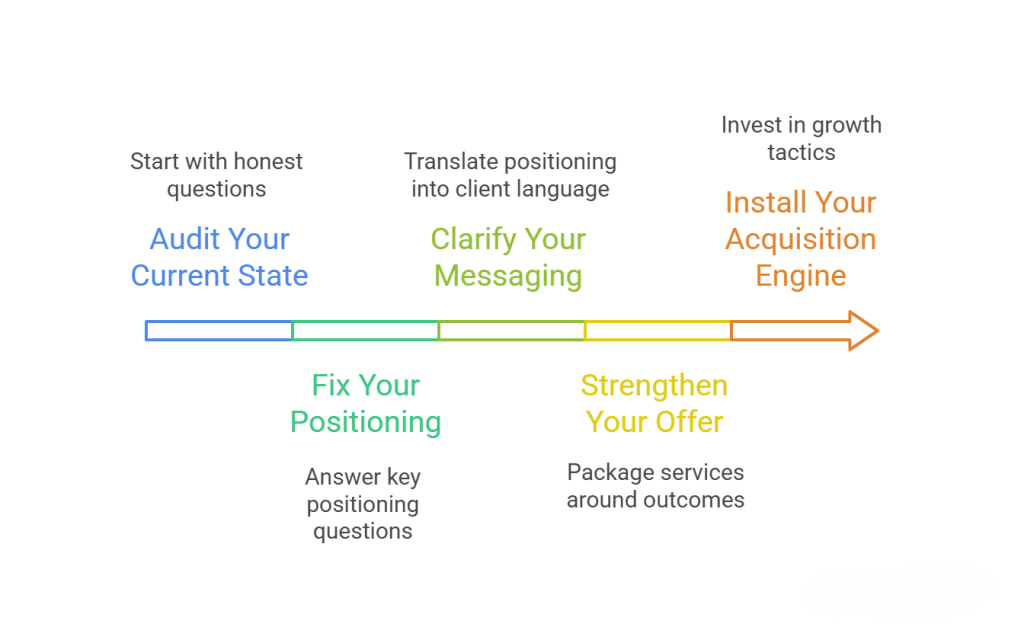
Here’s how to fix your foundation before you scale:
Step 1: Audit Your Current State
Start with honest questions:
-
Do you articulate why someone should choose you over alternatives in one clear sentence?
-
Does your messaging sound different from your competitors?
-
Do you attract qualified leads or tire kickers?
Look at your customer acquisition data. How much does acquiring a customer cost you? How long does your sales cycle take? What percentage of leads convert?
These numbers tell you where your foundation is weak.
What This Means for You: The numbers don’t lie. Look at your data before you spend more money.
Step 2: Fix Your Positioning
Answer these questions:
-
Who do you serve?
-
What specific problem do you solve?
-
Why are you uniquely qualified to solve the problem?
-
What makes your approach different?
Your positioning should be specific enough so some people immediately know you’re not for them. If everyone is your customer, nobody is your customer.
Strategic positioning translates into either a premium price or lower costs. Positioning creates competitive advantage tactics won’t replicate.
What This Means for You: Specificity repels the wrong people and attracts the right ones.
Step 3: Clarify Your Messaging
Take your positioning and translate it into language your ideal client uses.
Test your messaging by showing it to people in your target market. Ask them:
-
What do you think we do?
-
Who do you think this is for?
-
What makes this different?
If they don’t answer clearly, your messaging needs work.
Clear messaging generates qualified leads. Clear messaging reduces customer acquisition costs. Clear messaging enables faster sales cycles.
What This Means for You: Test your messaging with real people before you scale. Their confusion is your feedback.
Step 4: Strengthen Your Offer
Package your services around outcomes, not hours. Make the transformation obvious. Remove friction from the buying process.
A strong offer answers:
-
What will change for the client?
-
How long will the change take?
-
What does success look like?
When your offer is clear, qualified prospects move quickly. They understand the value. They see themselves in the transformation.
What This Means for You: Stop selling hours. Start selling transformation.
Step 5: Install Your Acquisition Engine
Only after your foundation is solid should you invest in growth tactics.
Now your ads point to clear positioning. Your messaging resonates with the right people. Your offer makes the buying decision obvious.
This is when tactics work. This is when you see consistent, qualified leads. This is when customer acquisition costs drop and conversion rates climb.
What This Means for You: Tactics work when the foundation is solid. Build the foundation first.
What Happens When You Fix Your Foundation First?
The data is clear:
Retention delivers 25 to 95% profit increases from a 5% improvement. New customer acquisition costs 5 to 25 times more than retention. Yet 75% of software companies saw declining retention in 2024 despite increased spending.
The issue isn’t budget allocation. The issue is execution quality rooted in weak foundations.
When businesses fix their roots first, they experience significant profit increases compared to forecast baseline. They get better growth without throwing more money at the problem.
Clear positioning enables businesses to achieve 5 to 6 inbound leads per day. Strategic positioning drives 21% higher profitability. Customer-centric cultures built on strong foundations outperform competitors consistently.
This isn’t theory. This is what happens when you stop amplifying broken foundations and start building on solid ground.
What This Means for You: Fix your foundation and your results change. Skip your foundation and your costs climb.
What’s Your Next Move?
You have two choices:
Keep throwing money at tactics and hope something sticks. Or fix your foundation first and watch tactics work.
Businesses often choose the first option because it feels faster. They want leads now. They want growth now. They want results now.
But fast and broken is still broken.
The businesses winning are the ones slowing down long enough to get their foundation right. They clarify their positioning. They sharpen their messaging. They strengthen their offer.
Then they scale.
And when they scale, it works. Because they’re amplifying something worth amplifying.
Fix your roots first. Then rise.
The only way to build something lasting is to build the right foundation.
Frequently Asked Questions About Marketing Foundations
How do I know if my marketing foundation is broken?
Look at your customer acquisition costs and conversion rates. If you’re spending more to acquire customers each year, if your sales cycle is longer than 90 days, or if you’re attracting unqualified leads, your foundation needs work. The numbers tell the story before your feelings do.
How long does fixing a marketing foundation take?
Auditing and fixing your foundation typically takes 4 to 8 weeks. The timeline depends on how complex your positioning is, how many services you offer, and how quickly you implement changes. Most businesses see improvements in lead quality within 30 days of clarifying their positioning.
Do I need to pause my ads while I fix my foundation?
Not necessarily. You decide based on your current performance. If your ads are losing money or attracting the wrong leads, pause them and fix the foundation. If your ads are breaking even or profitable, keep them running while you work on improvements. Test your new messaging alongside your current campaigns.
What’s the difference between positioning and messaging?
Positioning is the strategic choice of who you serve, what problem you solve, and why you’re different. Messaging is how you communicate your positioning to the market. Positioning is internal strategy. Messaging is external communication. You need clear positioning before you write effective messaging.
How do I test if my messaging is working?
Show your messaging to 10 people in your target market. Ask them three questions: What do you think we do? Who is this for? What makes this different? If they answer clearly and accurately, your messaging works. If they’re confused or give vague answers, your messaging needs clarity.
Won’t narrowing my positioning limit my opportunities?
No. Specificity attracts. When you try to serve everyone, you attract no one. Your message becomes too generic. When you narrow your positioning, you repel the wrong people and attract ideal clients who see themselves in your work. Narrow positioning increases opportunities with the right people.
What if my competitors have similar positioning?
Dig deeper into what makes you different. Your unique positioning comes from your approach, your experience, your values, or your methodology. Two businesses serving the same market solve problems differently. Find your difference and build your positioning around the difference.
How often should I revisit my marketing foundation?
Audit your foundation every 12 to 18 months or when you notice declining performance. Markets shift. Customer needs evolve. Your business grows. What worked two years ago might need refinement today. Regular audits keep your foundation strong as your business scales.
Key Takeaways
-
Fix your marketing foundation before investing in ads, because tactics amplify what you already have, whether broken or strong
-
Audit three core elements: positioning (why you), messaging (how you communicate), and offer (what you sell and how you package the offer)
-
68% of businesses waste money on campaigns without results because their foundation is weak, not because their tactics are wrong
-
Clear positioning attracts qualified leads, reduces customer acquisition costs, and enables premium pricing
-
Test your messaging with real people in your target market before scaling, because their confusion is your feedback
-
Package your services around outcomes and transformation, not hours and features
-
Only invest in growth tactics after your foundation is solid, because that’s when tactics work and costs drop