



Spending months perfecting your marketing before launch wastes time and money. Real market feedback from imperfect launches beats theoretical optimization every time. Launch at 70% ready with clear positioning, then improve based on real data.
-
Launch at 70% readiness with solid positioning and a clear offer. Real market feedback beats endless planning every time.
-
Imperfect execution with real traffic teaches you more than perfect planning in isolation.
-
When positioning is unclear, people hide behind perfectionism instead of fixing the real problem.
-
Speed to market creates learning opportunities that planning never provides.
I’ve watched businesses burn through six months and $50K trying to perfect a marketing system before a single person sees it.
They obsess over every headline. Debate button colors for weeks. Map out these elaborate funnels with perfect copy and flawless design.
Then they launch… and the market doesn’t care about any of it.
Here’s what I learned after scaling 50+ service businesses: all the preparation? Expensive procrastination.
What’s the Real Cost of Perfecting Marketing Before Launch?
Planning feels productive. You sit in a room with your team, move things around on a whiteboard, and feel like you’re doing important work. But you’re never exposing yourself to rejection or failure.
There’s this false sense of control. You think if you consider every scenario and optimize for every edge case, you’ll guarantee success.
Markets don’t work like this.
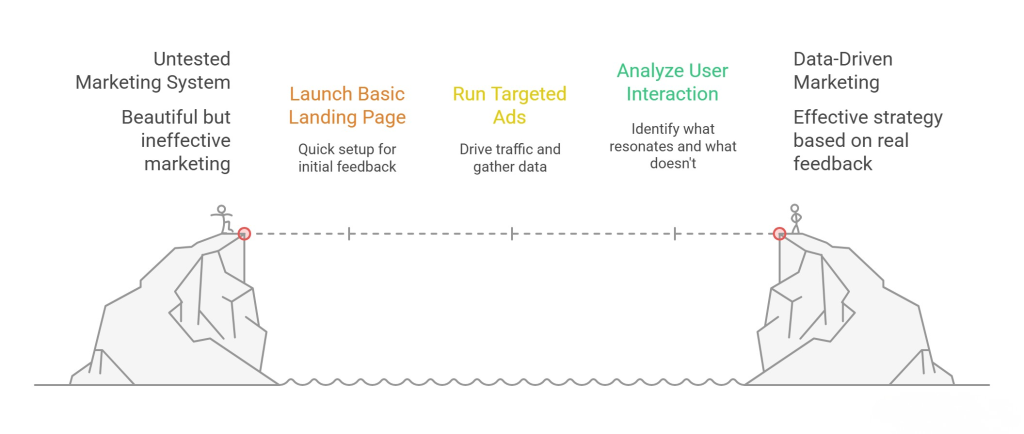
I had a client who spent six months building the “perfect” marketing system. Beautiful website. Perfect messaging. The whole thing looked incredible.
Zero traffic. Zero data. Zero real feedback.
Meanwhile, another client threw up a basic landing page in a weekend and ran some ads to it. The copy wasn’t perfect. The design was normal. Within two weeks, they had data showing what resonated and what didn’t.
You’re not learning anything until real people with real problems interact with your marketing.
Everything before is guessing dressed up as strategy.
Bottom Line: Planning feels safe, but every day spent optimizing in isolation is a day without real market feedback. The market tells you what works, not your whiteboard.
When Should You Launch Your Marketing?
The 70% Readiness Rule
If you’re 70% ready, launch. Here’s the breakdown.
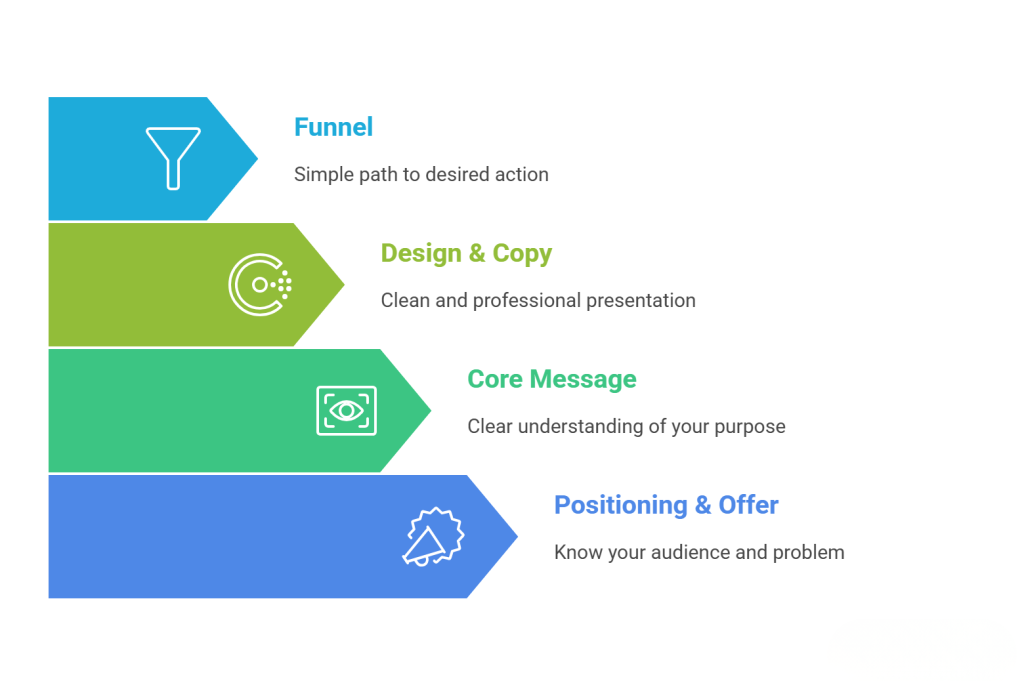
What must be solid from day one:
-
Your positioning: who you’re for
-
Your offer: what problem you solve
-
Your differentiation: why someone chooses you over alternatives
These are non-negotiable. Without clear positioning and a compelling offer, you’re not ready.
Your core message needs to be clear. Not perfect. Clear. People land on your page and immediately understand what you do and whether it’s for them.
What stays imperfect at launch:
-
Design: clean and professional is enough
-
Copy: clear communication beats clever wordsmithing
-
Funnel: start simple with one page, one offer, one call to action
-
Complexity: add this later when you know what works
I’ve launched campaigns with placeholder images, basic templates, and copy good enough. They worked because the positioning was right and the offer was compelling.
Your audience doesn’t care if your website is perfect. They care if you solve their problem.
The Takeaway: Get your positioning and offer right. Everything else improves through real market testing, not theoretical perfection.
Why Does Speed to Market Beat Perfect Planning?
One of our construction clients needed a website. We built a simple five-page site to start. It looked great, we did extensive research, then we launched. We collected data for three months, then did a round of revisions.
Now it’s ranking well and converting well.
We could’ve spent those three months tweaking things in isolation. Instead, we spent them learning what worked with real traffic.
The market tells you what to fix. You need to be willing to listen.
Every day spent optimizing in a vacuum is a day you’re not learning what works. While you’re perfecting your landing page, someone else is getting in front of your customers.
What This Means: Three months of real data beats three months of hypothetical planning. The market shows you what to fix faster than any brainstorming session.
Is Perfectionism Hiding a Positioning Problem?
Here’s something I’ve noticed: unclear positioning makes people compensate with perfection.
When you don’t know who you’re for or why someone should choose you, you try to make everything perfect. You think if the website is beautiful enough or the copy is clever enough, it’ll make up for the fact your offer isn’t differentiated.
The One Question That Reveals Everything
I ask clients one simple question: if I put traffic on this today, who exactly is this for and why would they choose you over the three other options they’re considering?
If they answer clearly in one sentence, we get them moving. If they give me a long answer or something vague? Positioning problem. No amount of website tweaking fixes it.
When your positioning is clear, launching feels less risky because you know exactly who you’re talking to and what problem you’re solving.
That’s why we always fix the roots first. If you don’t know who you are and who you’re for, all the optimization in the world is rearranging deck chairs.
Reality Check: Clear positioning gives you the confidence to launch imperfect marketing. Unclear positioning makes perfection feel necessary. Fix the foundation first.
Does This Apply Beyond Marketing?
Yes. This principle works everywhere in your business.
Founders spend months crafting the perfect job description and designing elaborate interview processes, trying to find the perfect candidate. Meanwhile, they’re drowning in work they could’ve delegated weeks ago.
Sometimes you need to hire someone good enough, see where the gaps are, and adjust from there.
Same thing with operations. People try to build complex systems and processes before they know what their bottlenecks are. You don’t know where you need systems until you’re doing the work and seeing where things break down.
Real-world feedback beats theoretical planning every time.
You can’t optimize for problems you haven’t encountered. You can’t build systems for a business you don’t fully understand. You can’t predict what your market wants without putting something in front of them.
The Pattern: Whether hiring, operations, or marketing, real-world testing beats perfect planning. Start simple, learn fast, adjust based on what breaks.
How Do You Break Free From the Perfection Trap?
Reframe the Risk
When a client is stuck in the perfection trap, I reframe the conversation around risk.
Most people think launching imperfect is risky. I show them NOT launching is the bigger risk.
Right now, you’re spending money and time with zero feedback. Every day you wait, you’re burning cash and losing opportunities. If you launch tomorrow, worst case: you get data showing what to fix. Best case: you start generating leads immediately.
Either way, you’re better off than you are right now.
I set clear expectations upfront. We’re not launching a finished product. We’re launching a learning experiment. The goal isn’t perfection. It’s feedback.
Then I make it tactical. Here’s what we’re launching with. Here’s what we’re testing. In two weeks, we’ll have real data, and then we’ll make informed decisions about what to optimize.
Shift your mindset from “we need to get this right” to “we need to start learning.”
Once you see launching as the beginning instead of the end, everything changes.
Real growth isn’t about having everything figured out. It’s about moving fast, learning constantly, and adapting based on what’s working.
That’s why we call ourselves a growth partner, not a marketing agency. The businesses winning aren’t the ones with perfect plans sitting in desk drawers. They’re the ones who launch at 70%, learn fast, and iterate based on real feedback.
Stop perfecting. Start testing.
Here’s Your Move: Shift from “we need to get this right” to “we need to start learning.” Launch is the beginning, not the end.
Common Questions About Launching Before You’re Ready
What if my marketing fails because it’s not perfect?
You’ll get data showing what to fix. That’s more valuable than months of guessing. Failure with feedback? Better than perfection without testing.
How do I know if I’m 70% ready?
Ask yourself: Do I know who this is for? Do I know what problem I solve? Do I know why someone would choose me? If yes to all three, launch.
Won’t launching imperfect hurt my brand?
No. Your audience cares about whether you solve their problem, not whether your design is award-winning. Clean and clear beats perfect every time.
What should I optimize first after launching?
Let the data tell you. Track what people do, where they drop off, what messages resonate. Optimize based on real behavior, not assumptions.
How long should I wait before making changes?
Collect data for at least 2-4 weeks with real traffic. You need enough interactions to see patterns. Then make informed revisions.
What if my positioning isn’t clear?
Fix it first. No amount of design or copy tweaking compensates for unclear positioning. Get clear on who you’re for before you launch.
Does this work for every industry?
Yes. The principle stays the same: real market feedback beats theoretical planning. Whether you’re B2B, B2C, service, or product, speed to feedback wins.
What’s the biggest mistake when trying to launch faster?
Skipping positioning work. People think 70% ready means launching with unclear offers. Wrong. 70% ready means launching with clear positioning and imperfect execution.
Key Takeaways
-
Launch at 70% ready with solid positioning and clear messaging. Everything else improves through real testing.
-
Planning without market feedback? Expensive procrastination. You’re burning time and money while learning nothing.
-
Clear positioning makes launching feel less risky. Unclear positioning makes perfection feel necessary.
-
Speed to market creates learning opportunities that planning never provides. Real data beats theoretical optimization
-
This principle applies beyond marketing to hiring, operations, and every business decision. Test first, perfect later.
-
Winning businesses launch fast and iterate based on real feedback, not perfect plans sitting in drawers.