

Companies are spending $50,000 on AI tools and consultants, thinking they’ll automate their way to efficiency.
But their positioning is still unclear. Their messaging is inconsistent across channels. Their team doesn’t understand how these tools fit into the bigger picture.
The real cost isn’t the software. It’s the months of spinning wheels while everyone tries to figure out how AI fits into their broken processes.
Most businesses focus on AI’s sticker price while ignoring the organizational surgery required to make it actually work. Implementation costs can start at $500K in the first year, but the hidden expense is opportunity cost.
While companies try to make AI work with their fragmented approach, competitors with integrated systems are already pulling ahead.
AI Doesn’t Work in Isolation
You can’t just have your copywriter use AI to write better ads if the AI doesn’t understand your positioning strategy, your customer data, and your conversion metrics.
AI needs context from across your entire business to be effective.
Companies trying to use AI to make their silos more efficient are essentially asking AI to optimize broken processes. It’s like asking AI to make a faster horse instead of inventing the car.
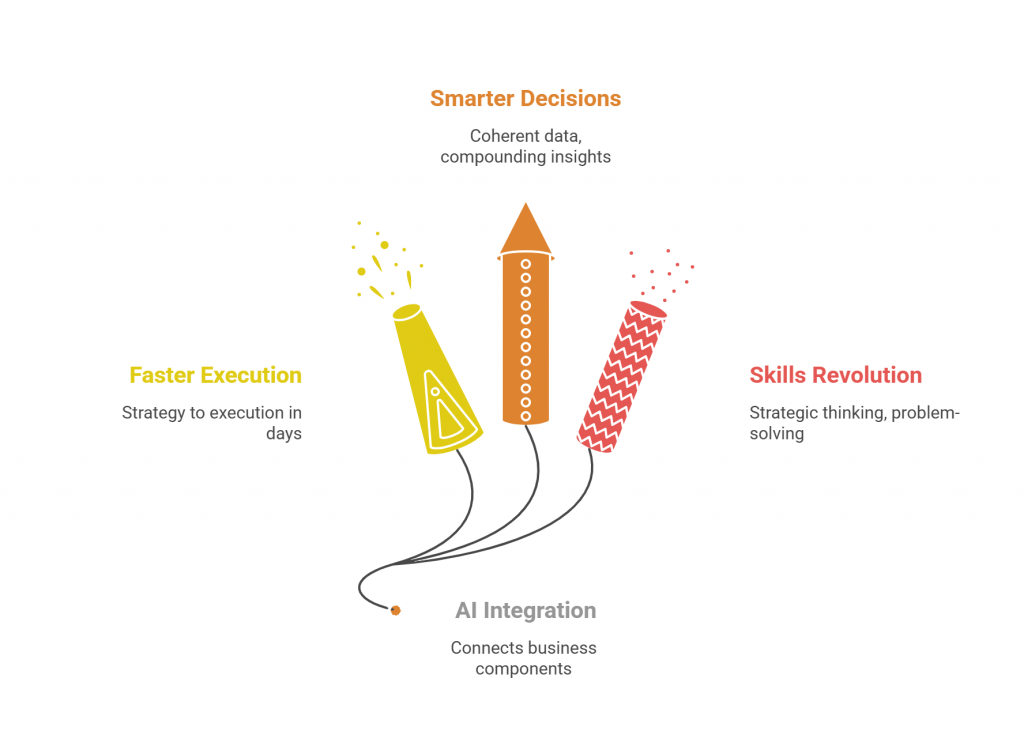
When AI has access to your strategic framework, customer insights, performance data, and sales conversations, it becomes exponentially more powerful. It becomes the connective tissue that makes everything work together.
It can take insights from your sales calls and immediately inform your creative strategy, then optimize your media spend based on real conversion data.
The Integration Advantage
The market is rewarding people who can think systemically while executing expertly.
Integrated companies can move from strategy to execution in days, not months. When they spot a market opportunity, their positioning, messaging, creative, and optimization all move as one unit.
Instead of the strategy team taking two weeks to brief creative, then creative taking another week to brief the media team, then everyone going back and forth on revisions, an integrated approach means one person or team can see the full picture and execute across all touchpoints immediately.
They’re not just faster. They’re smarter.
Because the same strategic thinking that informs their positioning also drives their creative decisions and optimization choices, everything compounds. Their data tells a coherent story instead of conflicting signals from different departments.
It’s the difference between a Swiss watch and a bunch of separate clocks trying to keep the same time.
The Skills Revolution
Skills transformation is accelerating. Skills for roles have changed by 25% since 2015, and by 2030 that number is expected to reach 65%.
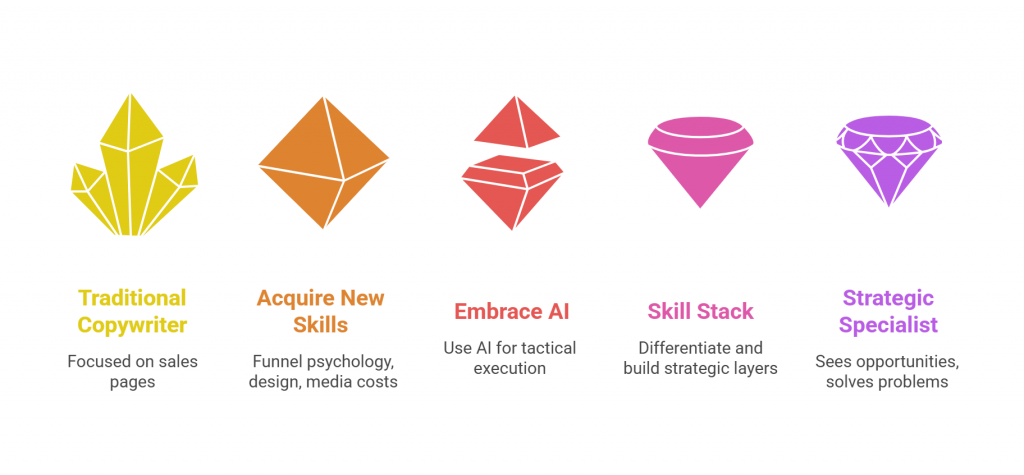
A copywriter who’s been writing sales pages for 10 years can’t just stay in that lane anymore. They need to understand funnel psychology, basic design principles, how their copy affects media costs, and how it impacts the sales conversation.
AI can now write amazing copy if you know what you’re doing. The barrier to entry for new copywriters has become much easier. Now you need to differentiate and skill stack to stand out.
But here’s the key: they’re not becoming mediocre at everything. They’re using their deep copywriting expertise as the foundation and building strategic layers on top of it.
The specialists who embrace this become incredibly valuable because they can see opportunities and solve problems that siloed teams miss. The ones who resist and say “I just do ads” or “I just write copy” are becoming commoditized because AI can handle the tactical execution.
Rebuilding How People Think
The organizational restructuring cost is so much higher than the software cost because you’re not just buying tools. You’re rebuilding how your people think and work together.
AI workforce transformation means 31% of employees will need to learn new skills to work with AI in the next year, increasing to 45% within three years.
The hardest shift is getting founders to stop thinking about people as “resources” for specific tasks and start thinking about them as strategic thinkers who happen to execute in certain areas.
Most founders built their teams like an assembly line: “You do ads, you do copy, you do design.” But integration means everyone needs to understand the why behind what they’re doing, not just the how.
The founder has to go from being a traffic director to being more like an orchestra conductor where everyone understands the full piece of music, not just their individual part.
What’s really hard is that it feels slower at first. Instead of just saying “Make this ad,” you’re having conversations about positioning and customer psychology and how this ad fits into the broader funnel.
But once it clicks, founders realize they’re not managing a bunch of separate contractors anymore. They have a team that can think strategically about problems and execute solutions without constant direction.
The founder stops being the bottleneck because everyone understands the system, not just their piece of it.
The Future Belongs to Revenue Engine Builders
You can’t just bolt AI onto broken foundations and expect it to work.
Most clients come thinking they need better ads or a prettier website. But when you’re thinking integration, you realize their messaging doesn’t connect to their funnel, their funnel doesn’t align with their sales process, and their sales process doesn’t reflect their actual positioning.
Everything exists in silos.
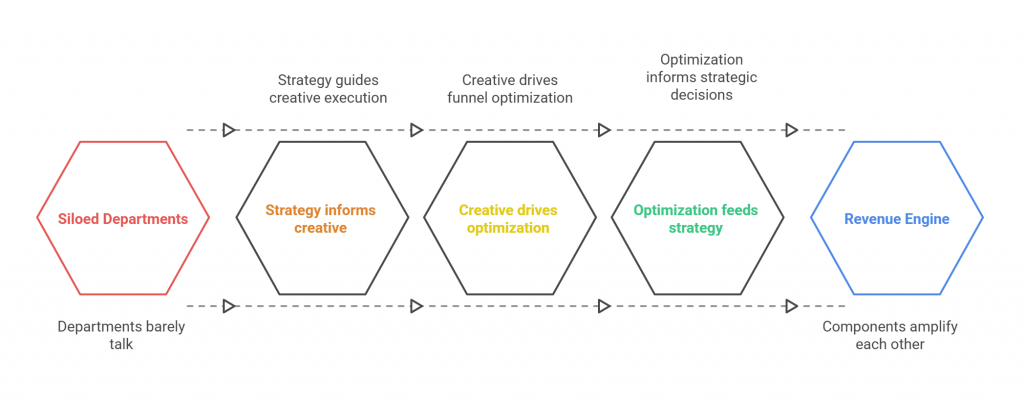
The solution is building a system where strategy informs creative, creative drives optimization, and optimization feeds back into strategy. Instead of having three separate departments that barely talk to each other, you have one revenue engine where every component amplifies the others.
Companies that think like this will dominate. The ones that stay siloed will become commoditized.
The hidden expense of AI implementation isn’t the software or the consultants. It’s the complete organizational restructuring required to make AI actually deliver on its promise.
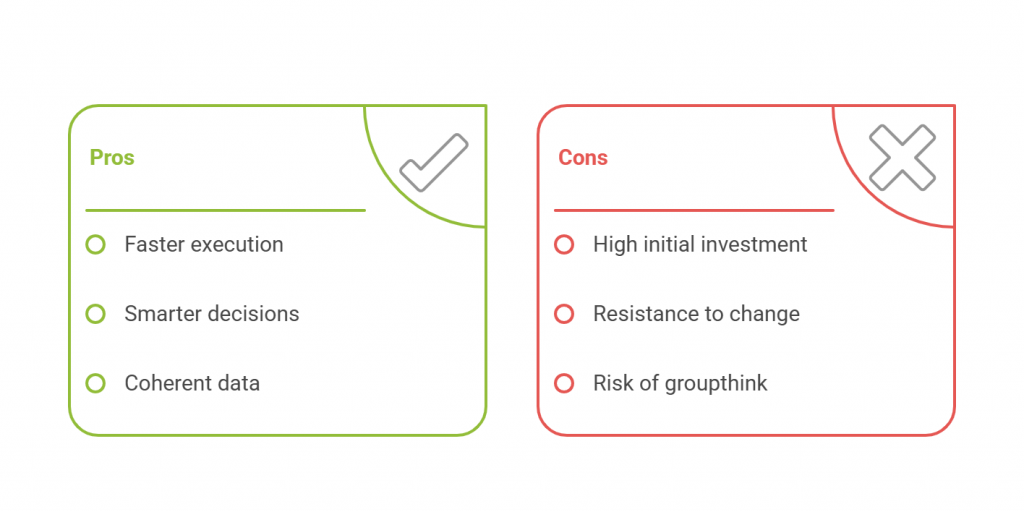
But for companies willing to make that investment, the competitive advantage is undeniable.