



74% of web content is now AI-generated, creating a trust crisis. 57% of people trust human content more than AI content. Brands with authentic human voices are becoming rare, and rarity creates value.
The issue isn’t using AI… it’s letting machines replace your thinking instead of amplifying it. When you train AI tools to match your voice and extract your expertise, you get speed without losing authenticity. Your voice is your competitive moat.
We use very specialized tools for our clients that ensures their content stays human and is their actual expertise and not collective ChatGPT responses.
Core Answer
• AI-generated content now makes up 74% of new web pages, flooding the market with machine-written material
• 57% of consumers trust human-created content more than AI content, creating a “trust penalty” for AI-labeled work
• Authenticity beats production volume because people sense when a message comes from a person versus a machine
• By 2027, 20% of brands will position themselves around human-first operations because trust is the scarcest marketing resource
• Your human voice, shaped by experience and failure, is now your strongest competitive advantage
I used to think AI would speed up content creation.
I was wrong about what the real problem would be.
AI did speed things up. But most people used it wrong. Instead of training AI to amplify their thinking, they let AI replace their thinking. Now 74% of new web pages contain AI-generated content. Half of all new articles online are written by machines, not people.
People notice.
What Is the AI Trust Problem?
The data shows something interesting. 57% of people trust human-created content more than AI content. When you label something as AI-generated, people view the exact same piece more negatively than when it’s labeled human-created.
Quality isn’t the issue anymore.
Authenticity is. When people sense a message came from a machine instead of a person, they apply what researchers call a “trust penalty.” They discount the information before they even process the content.
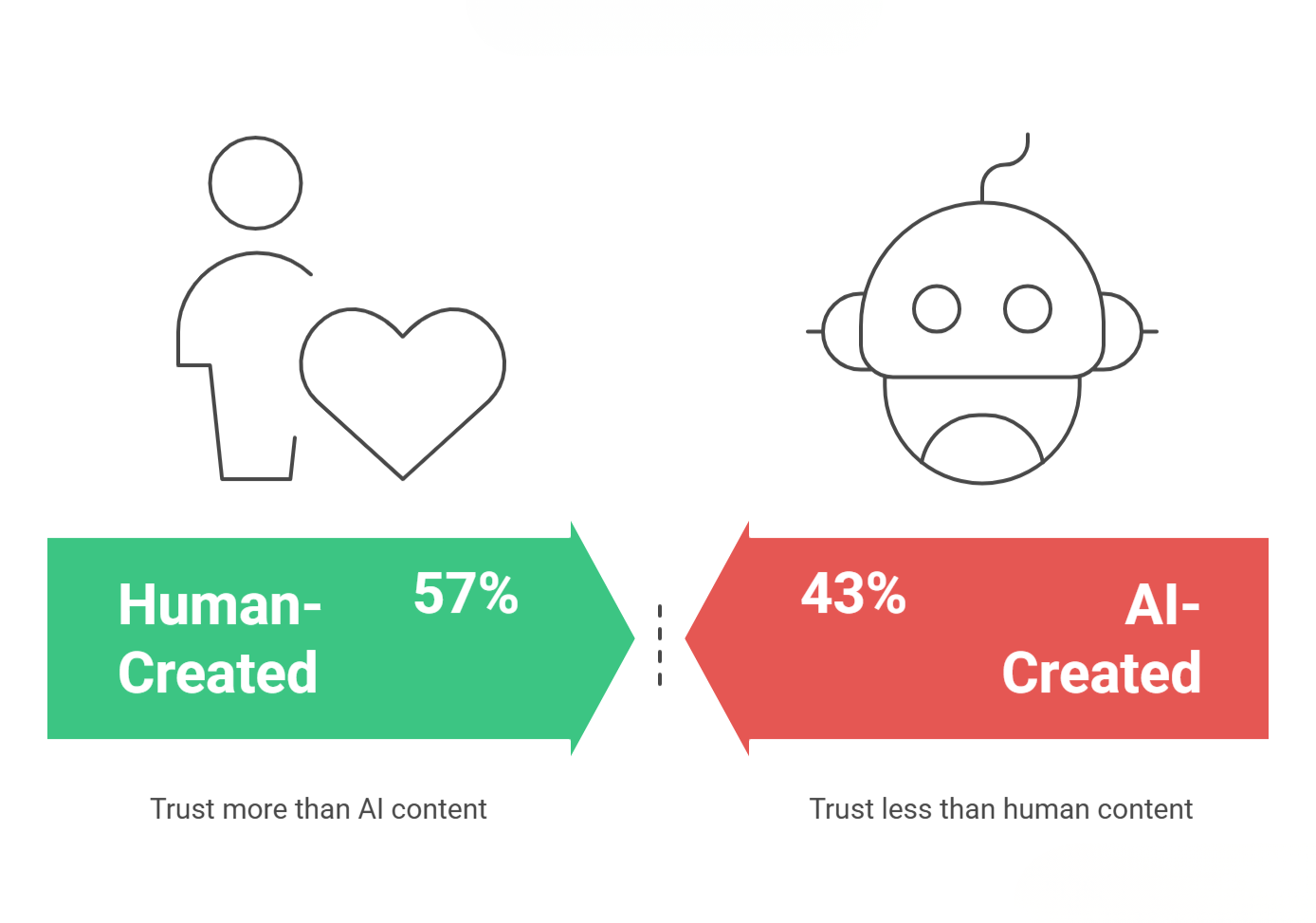
I’m seeing a pattern across companies: brands with authentic human voices are becoming rare.
Rare is valuable.
Bottom line: Trust penalties apply automatically when content feels machine-generated, regardless of objective quality.
Why Foundation Beats Tactics
I think we’re looking at this wrong. Companies keep asking “How do we use AI to create more content faster?” when the better question is “How do we use AI to help us without letting it replace what makes us trustworthy?”
The difference matters. AI helps when it learns from you, matches your voice, and extracts your expertise. AI hurts when it generates generic content without your perspective baked in.
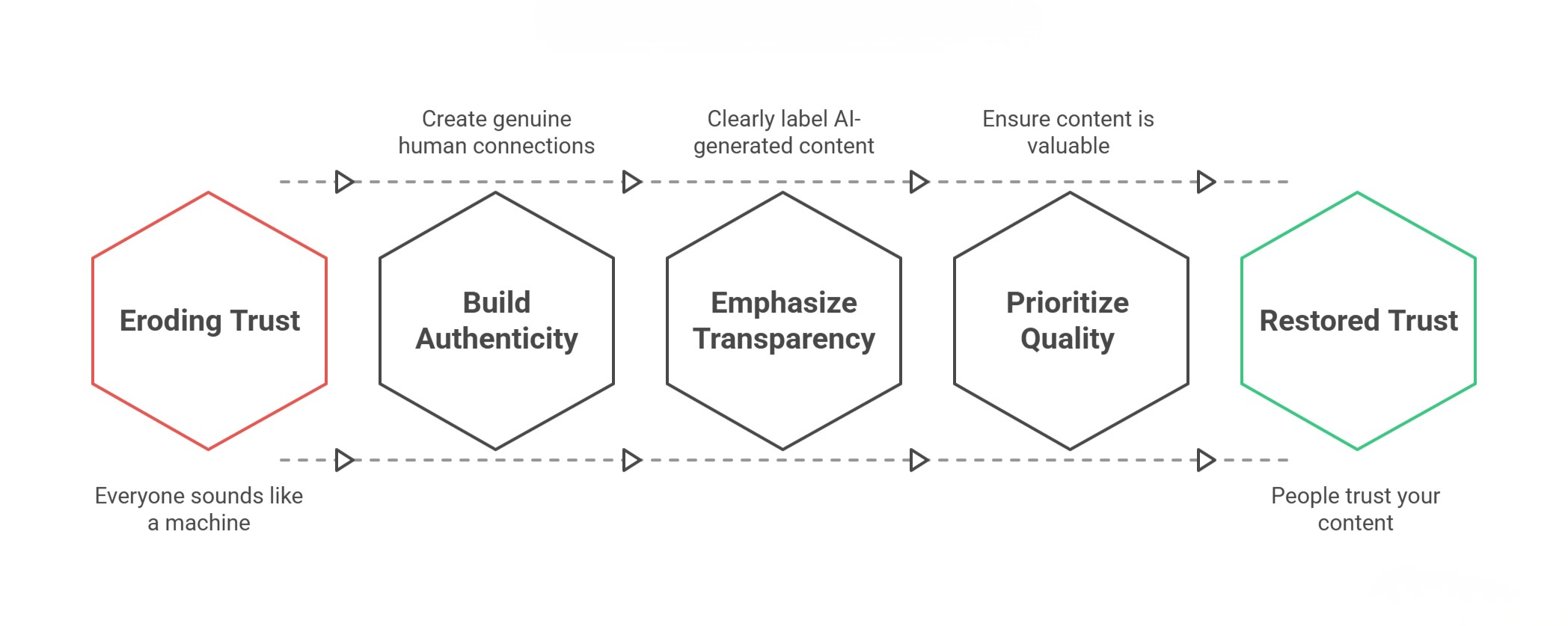
You don’t solve strategic problems with tactical solutions.
AI writes copy. AI designs ads. AI calls stores. AI speeds up production when trained properly. But AI doesn’t build genuine connection. AI doesn’t read culture. AI doesn’t feel the moment and make meaning from confusion.
Humans do those things.
The brands losing right now are using AI to replace human thinking. The brands winning are using AI to amplify human thinking. Same tool, different application.
Gartner predicts 20% of brands will position themselves around the absence of AI in their operations by 2027. Not because AI is bad, but because trust became the scarcest resource in marketing.
What this means: The competitive advantage shifted from production speed to authenticity depth.
How to Build Your Voice Advantage
If you’re building something right now, your voice is your moat.
Not your tactics. Not your tools. Your human perspective, shaped by real experience, expressed in language only you would use.
The brands winning in 2026 will identify cultural opportunities and act on them immediately. They’ll prioritize emotional resonance over production volume. They’ll sound like people, not algorithms.
This isn’t about rejecting AI. I’m not against using AI for content… it helps a lot and speeds things up when you use it right.
The key is training AI to work with you, not instead of you. When you use tools trained on your voice, fed by your expertise, shaped by your patterns… AI becomes an accelerator. When you use generic AI that spits out generic content, you lose what matters most.
Steps to Develop Your Human Voice
1. Document your thinking in your natural voice, not the voice you think you should have
2. Share the patterns you’re observing from direct experience
3. Explain the failures you learned from and what changed
4. Describe the shifts in belief where you used to think X, then realized Y works better
5. Train AI tools on your voice so they amplify your thinking instead of replacing it
6. Use simple language and write like you’re explaining to a colleague
The content people remember comes from real perspective, not polished production.
Core principle: Authentic voice beats perfect execution when trust is the constraint.
Common Questions About Human Voice in Marketing
Q: Should I avoid using AI tools completely?
A: No. AI helps a lot and speeds things up when used right. The key is training AI to match your brand voice, learn from your patterns, and extract your expertise. Use machines to help you, not replace you. When you let AI replace your thinking, you lose what’s most important. When you train AI to amplify your thinking, you get speed without sacrificing authenticity.
Q: How do I know if my content sounds too AI-generated?
A: Read your work out loud. If phrases sound like corporate speak or feel overly polished, people will sense the machine. Look for contractions, natural pauses, and the way you’d explain something at a coffee shop. If you wouldn’t say those words to a friend, rewrite them.
Q: What if my authentic voice isn’t polished or professional?
A: Authenticity beats polish when building trust. People connect with perspective and honesty, not perfection. I’ve seen rough, direct writing outperform polished copy because readers trust the person behind the words.
Q: How long does building a recognizable voice take?
A: It’s less about time and more about consistency. If you write regularly in your natural style, people recognize your voice within weeks. The key is repetition without trying to sound like someone else.
Q: Can a brand have a human voice if multiple people write for it?
A: Yes, but you need clear principles. Define how you talk about problems, how you challenge readers, what language you avoid, and what beliefs drive your work. Multiple writers work when they share the same perspective, not when they copy the same style guide.
Q: Is this just a trend, or will human voice matter long-term?
A: As long as AI generates content at scale, human voice will remain valuable. When machines flood a space, scarcity shifts to what machines don’t do well. Right now, machines don’t build trust through authentic perspective. This isn’t a trend… it’s a structural shift.
Q: What’s the biggest mistake brands make with voice?
A: Trying to sound smart instead of clear. Brands layer jargon and polish onto everything, which removes personality. The second mistake is inconsistency. Writing in your voice one day and corporate speak the next destroys trust faster than sounding like AI.
Q: How do I scale content without losing my human voice?
A: Train AI tools on your voice and thinking patterns, then use them to speed up production while you focus on strategy and perspective. Create frameworks for your thinking, not templates for your writing. When you train people or AI on your decision-making process and perspective, they amplify your voice instead of diluting it. Scale the thinking, not the exact phrasing.
Q: What’s the difference between AI that helps and AI that hurts?
A: AI helps when it’s trained on your brand voice, learns your patterns, and extracts your expertise. AI hurts when you feed it generic prompts and publish generic output. The tool is the same. The difference is whether you’re using machines to help you think faster or letting machines think for you.
Key Takeaways
• 74% of new web content is AI-generated, creating massive trust barriers for brands trying to connect with audiences
• 57% of people trust human content more than AI content because authenticity triggers different psychological responses than machine output
• Trust penalties apply automatically when people sense machine-generated messages, regardless of content quality or accuracy
• By 2027, 20% of brands will position around human-first operations because trust became the scarcest marketing resource
• Your competitive moat is your voice… shaped by experience, expressed in natural language, built on patterns you’ve observed directly
• Companies winning in this environment prioritize emotional resonance and cultural awareness over production volume and tactical speed
• AI helps when trained to match your voice and extract your expertise… the goal is using machines to help you, not replace you
• The solution isn’t avoiding AI tools… it’s training them properly so they amplify your thinking without replacing what makes you trustworthy
Write in your voice. Share what you’ve learned from failure. Document the shifts in belief where your thinking changed.
Do this now.