



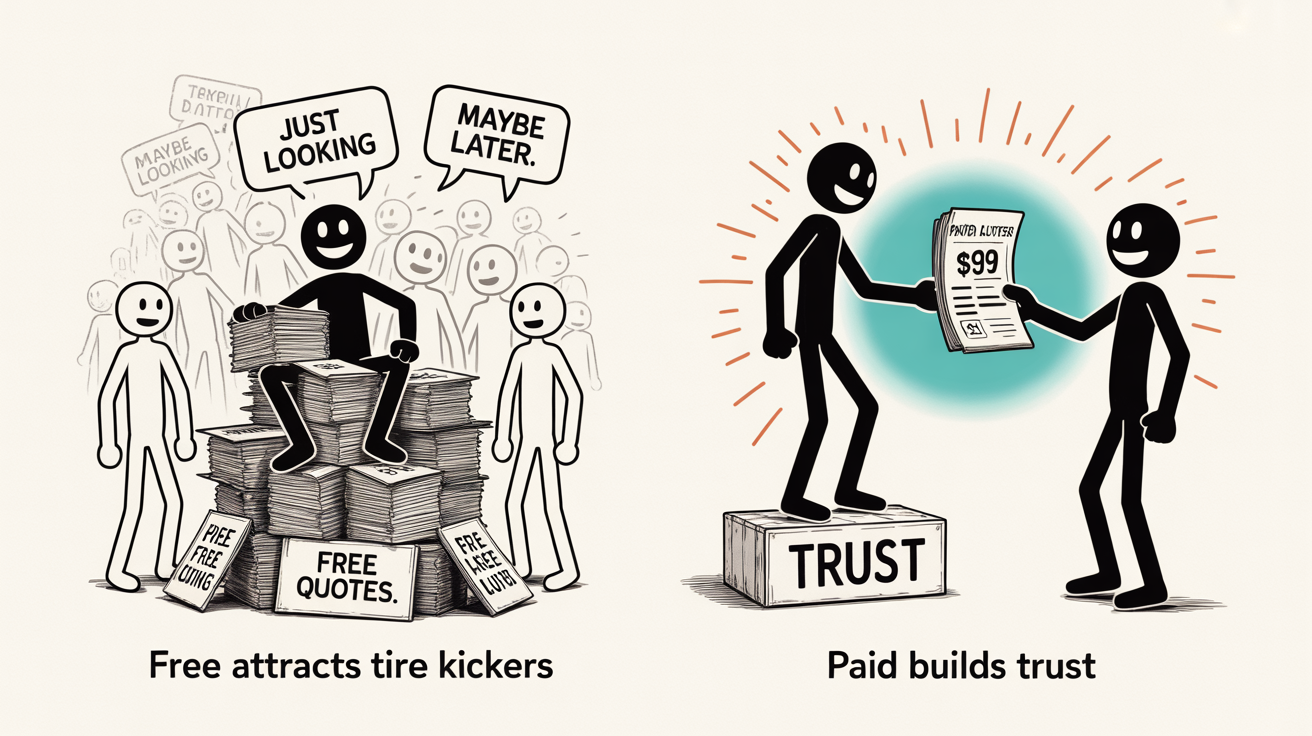
 Low-ticket offers aren’t revenue generators. They’re trust builders that filter out tire kickers, fund your ad spend, and create a pipeline of pre-qualified buyers ready for your high-ticket services. Here’s what you need to know:
- Charging even $27-$99 filters for intent and turns skeptics into customers
- A low-ticket offer can make your ads break even or profitable on the front end
- The real math: 50% conversion on 8 qualified leads beats 10% on 20 tire kickers
- Premium brands don’t cheapen themselves with entry offers. They get more sophisticated
- You’re building a system, not chasing individual sales
Most founders look at their entry-level offer and ask the wrong question. “How much revenue is this generating?” That’s transactional thinking. It’s why you’re stuck in feast-or-famine cycles, turning ads on and off every time cash gets tight. Here’s what you should be asking instead: “Is this building trust that converts into higher-ticket sales?”
Why Most Service Businesses Struggle With Lead Quality
Most service businesses don’t even have a low-ticket offer. They’re giving away free consultations, free quotes, free audits. Free attracts tire kickers. People shopping around with zero intention to buy. Look at the HVAC contractor doing free home inspections. He gets 20 requests a month. Maybe 2 convert to actual jobs. That’s 10% conversion, but he just burned 36 hours on 18 people who were never going to hire him. Now compare that to the contractor charging $99 for a premium inspection. He gets 8 requests instead of 20. But 4 of those convert to the main service. That’s 50% conversion. He spent 16 hours total, made 4 sales, plus collected $800 from the inspections themselves. Double the sales in half the time. Bottom line: When you charge for your expertise upfront, you’re not losing volume. You’re gaining quality and efficiency. 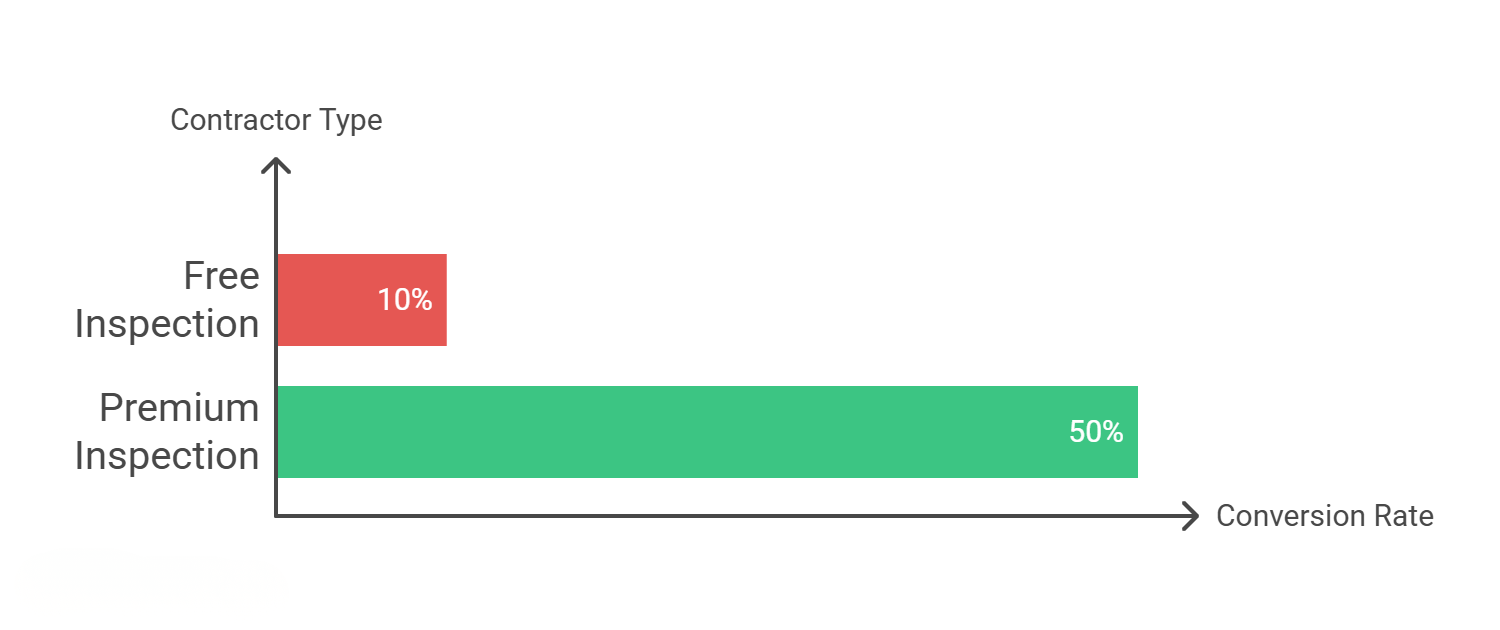
What Happens When Someone Pays You (Even $27)
When someone pays you, even a small amount, they cross a psychological threshold. Research shows that micro-commitments build trust and create the foundation for larger purchases. It’s the commitment and consistency principle in action. They’re not a skeptic anymore. They’re a customer. The person who downloads your free ebook never reads it. The person who pays $27 for it shows up, reads it, implements it. They have skin in the game. Here’s what changes in the sales conversation: when that HVAC guy presents his $2,500 repair quote, he’s not some random contractor trying to make a sale. He’s the expert they already hired and paid to give them answers. The trust is already there. The free quote guy? The homeowner’s thinking “Is he inflating this? Should I get three more quotes?” There’s no trust, just suspicion. The paid customer isn’t shopping around anymore. They’re deciding whether to move forward with you specifically, not whether to hire someone at all. The shift: From “Should I hire someone?” to “When do I move forward with you?” That’s the power of a trust deposit.
How Low-Ticket Offers Fund Your Customer Acquisition
You’re not leaving money on the table by charging for your first interaction. You’re making more because you’re spending time with the right people. With 42% of businesses struggling with low-quality leads, filtering for intent becomes your competitive advantage. The money you make from the low-ticket offer helps you invest in paid advertising. Your leads are literally paying for your ads. Here’s how the math works: You spend $500 on ads and get 8 people to buy your offer at $99. That’s $792. You just made money while building a list of qualified buyers. Now you can outspend your competition. While they’re turning ads on and off because they’re losing money, you’re running campaigns consistently, building your customer base every single day. The founder who can spend more to acquire a customer will always win. Key insight: A profitable front-end offer transforms advertising from a cost center into a profit center that feeds your main business. 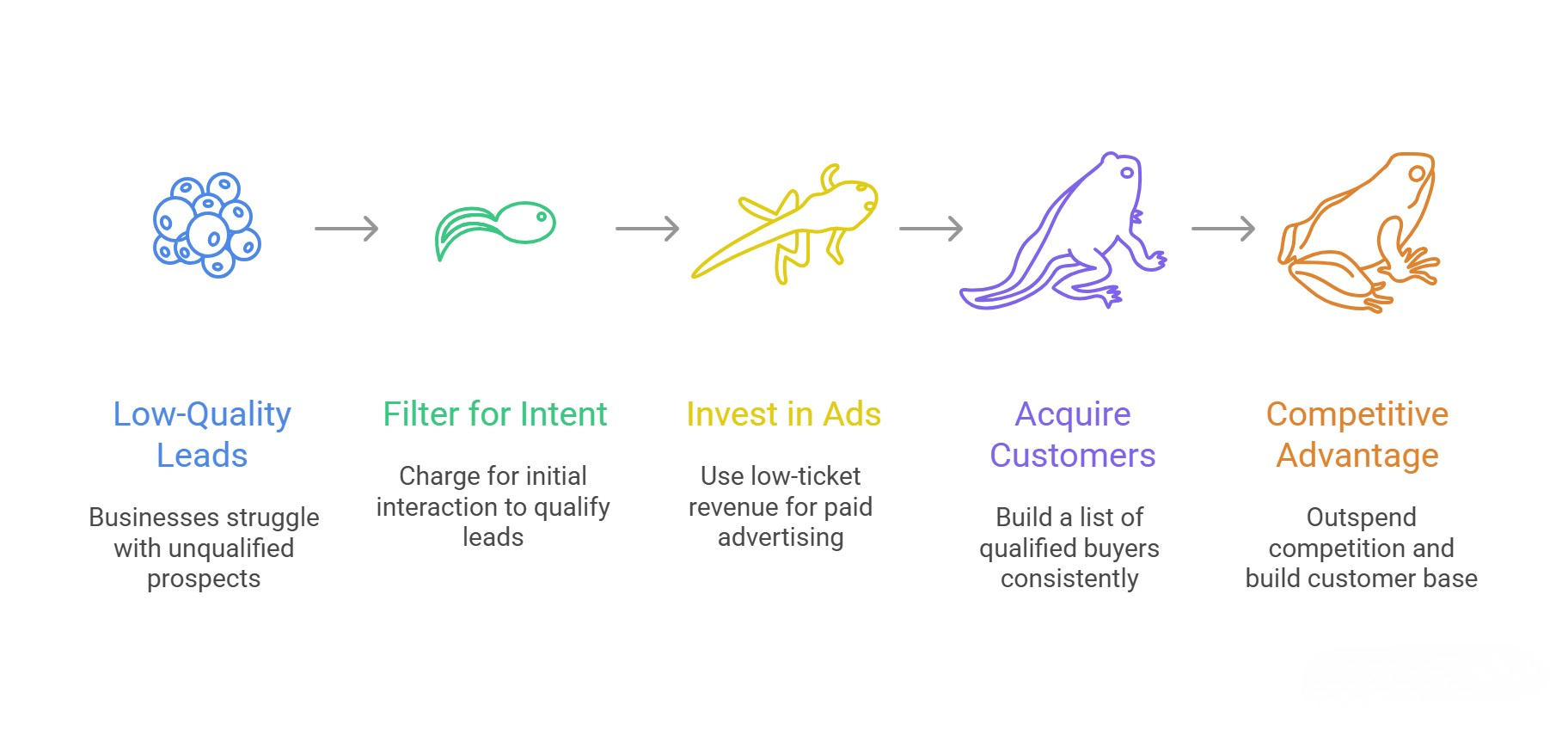
Why Founders Push Back on This Model
The biggest pushback I hear is “But I’ll make less money per customer upfront.” That’s short-term thinking. You’re looking at one transaction instead of the lifetime value and the system that feeds you customers consistently. Some founders worry it’ll cheapen their brand. They assume charging $99 makes them look less premium than charging $5,000. But every premium brand has an entry point. Apple has AirPods before you buy a MacBook. Having a strategic entry point makes you look more sophisticated because you understand how trust and buying psychology work. The reality? Most founders are scared. Scared to test something new, scared to “leave money on the table,” scared their current model is broken. What changes: The founders who build a low-ticket system stop worrying about where their next client is coming from.
Building a System vs. Chasing Sales
When you’re trying to sell a $5,000 service directly from a cold ad, you need everything to be perfect. One weak link and you just burned money. So founders run ads for a week, spend $500, get no sales, and shut everything down. Then they’re back to referrals and word of mouth. Inconsistent revenue. But when you have a low-ticket offer that converts profitably on the front end, you’re not gambling anymore. You’re not hoping someone will drop $5,000 from a cold ad. You’re building a pipeline of people who’ve already paid you, already experienced your expertise, and are warm for your main offer. The low-ticket offer turns paid advertising from a cost center into a profit center that feeds your main business. You stop panicking every time you spend money on ads. You stop worrying about where your next client is coming from. Because you’re not chasing sales anymore. You’re engineering a system. The difference: Hope versus strategy. Panic versus consistency. One transaction versus a repeatable acquisition engine.
Common Questions About Low-Ticket Offers
What price range works best for a low-ticket offer? Between $21 and $99 tends to be the sweet spot. Low enough that it’s an easy yes, high enough to filter out people who aren’t serious. Test different price points to see what converts best for your audience. Won’t offering something cheap make my brand look less premium? No. Every premium brand has an entry point. Apple sells AirPods before MacBooks. Tesla has lower-priced models. A strategic entry offer shows you understand customer psychology, which is more sophisticated than only selling high-ticket. How do I know if my low-ticket offer is working? Watch your conversion rates. You’re looking for 30-50% conversion from your low-ticket offer to your main service. Also track if your ad spend is breaking even or profitable on the front end. What if I get fewer leads overall? That’s the point. You want fewer, better leads. Eight qualified leads that convert at 50% beats 20 unqualified leads that convert at 10%. You make more money in less time. Should I still offer free content or consultations? Free content (blog posts, videos, social media) builds authority. But when someone wants your time or personalized expertise, charge for it. That’s where the filter happens. How long does it take to see results from a low-ticket offer? You’ll see immediate data on conversion rates within the first few weeks. The real payoff comes 30-90 days later when those customers are ready for your main offer and you’ve built a pipeline of warm buyers. What if my service is too complex for a low-ticket offer? Break off one piece of your expertise. A diagnostic, an audit, a strategy session, a training module. There’s always something valuable you can package at a lower price point that demonstrates your expertise. Can I use a low-ticket offer if I’m already established? Absolutely. In fact, established businesses benefit most because you already have proof and authority. A low-ticket offer just gives cold traffic a way to experience your expertise without the big commitment.
Key Takeaways
- Low-ticket offers are trust deposits, not revenue streams. Their job is to turn skeptics into customers and fund your acquisition system.
- Charging even $27-$99 filters for intent. Free attracts tire kickers. Paid attracts buyers.
- The math favors quality over volume. 50% conversion on 8 qualified leads beats 10% on 20 unqualified leads every time.
- Your ads can break even or profit on the front end. When leads pay for themselves, you can outspend your competition and build a consistent pipeline.
- Premium brands use entry points strategically. Apple, Tesla, and every sophisticated brand has a way for new customers to start small and build trust.
- You’re building a system, not chasing sales. Low-ticket offers transform customer acquisition from hope and panic into a repeatable, scalable engine.
- The biggest resistance is fear. Fear of leaving money on the table, fear of looking cheap, fear of change. The founders who push past it stop worrying about where their next client comes from.