



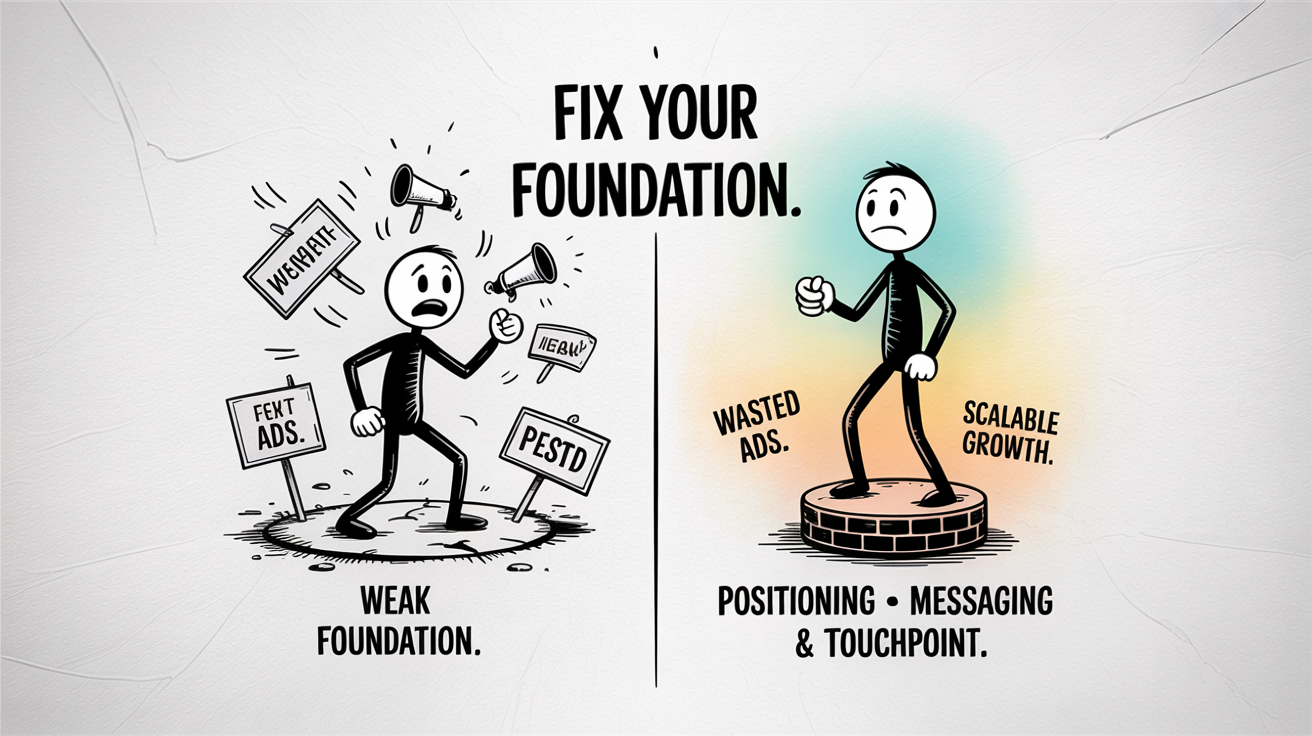
TL;DR: Spending money on ads won’t fix broken positioning, unclear messaging, or missing trust-building steps. If you’re getting traffic but not leads, the problem isn’t visibility. It’s your foundation.
When you’re getting traffic but not converting, fixing your foundation comes before spending another dollar on ads:
-
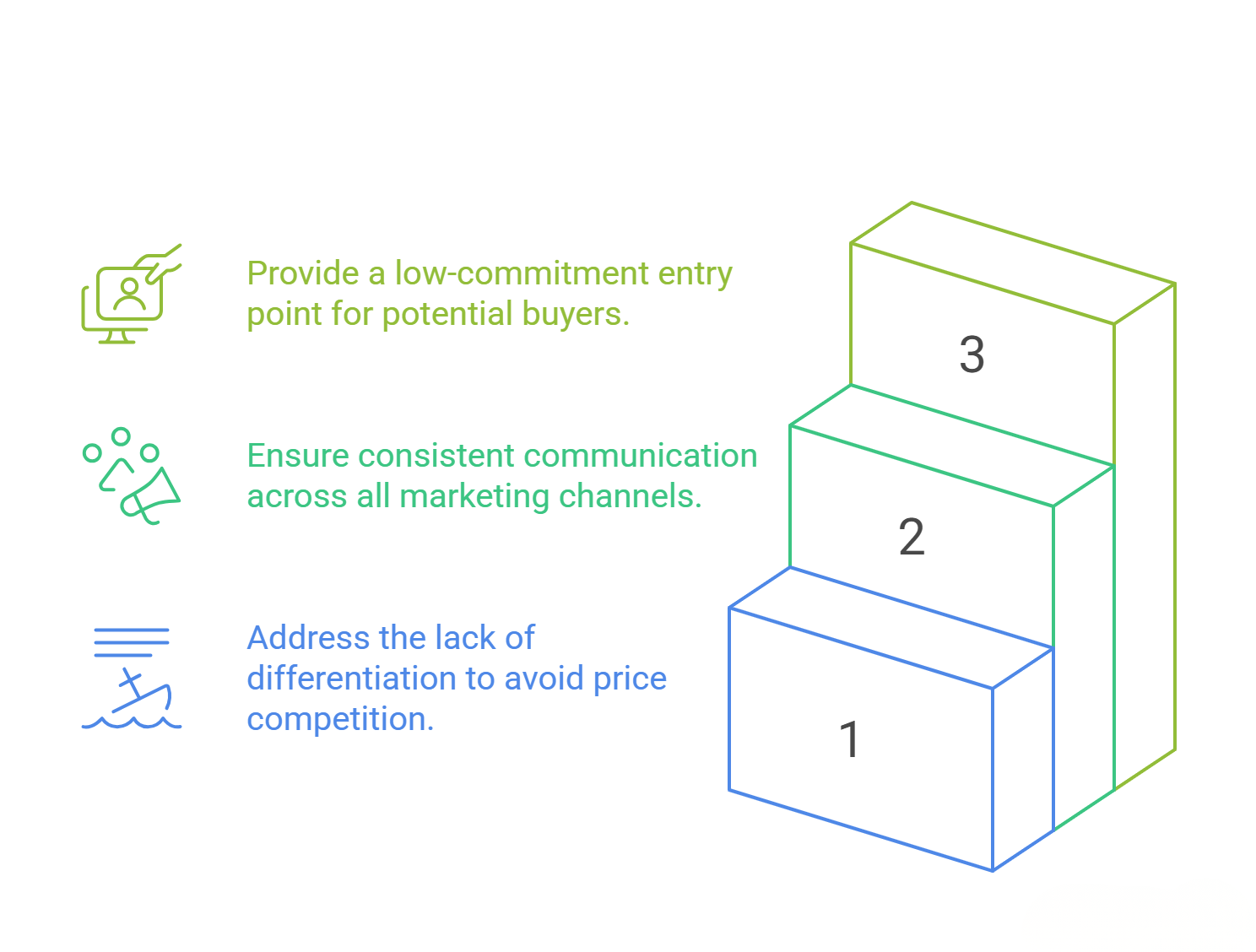
Poor positioning makes you compete on price instead of value
-
Unclear messaging means buyers forget you when comparing options
-
Missing first touchpoint pushes buyers away by asking for commitment too soon
-
The fix: Differentiate yourself, reframe your category, and build trust before scaling visibility
You need more leads. More visibility. More traffic.
That’s true. But here’s what I’ve learned: this isn’t where you start.
Founders tell us the same thing every week. “We need more people to see what we’re doing.” They’re right about the goal. They’re wrong about the problem.
When your foundation is broken, ads won’t fix it.
What Happens When You Skip Foundation Work
Let me show you what this looks like with real numbers.
Send 1,000 people to your website. About 10% take any action. That’s 100 people.
Of those 100, half give you permission to follow up through email or a call. Now you’re at 50.
From those 50, maybe 10 are ready to buy. If your messaging is strong, 5 close.
That’s 0.5% conversion. And you spent what on those ads?
Here’s the thing. If traffic comes in but leads don’t follow, something’s wrong with the traffic quality. Or (more likely) something’s wrong with what people find when they land.
Research shows that unclear positioning is the top reason campaigns fail. Not budget. Not timing. Not ad quality.
It’s your foundation.
Bottom line: Throwing traffic at broken positioning is like pouring water into a leaky bucket.
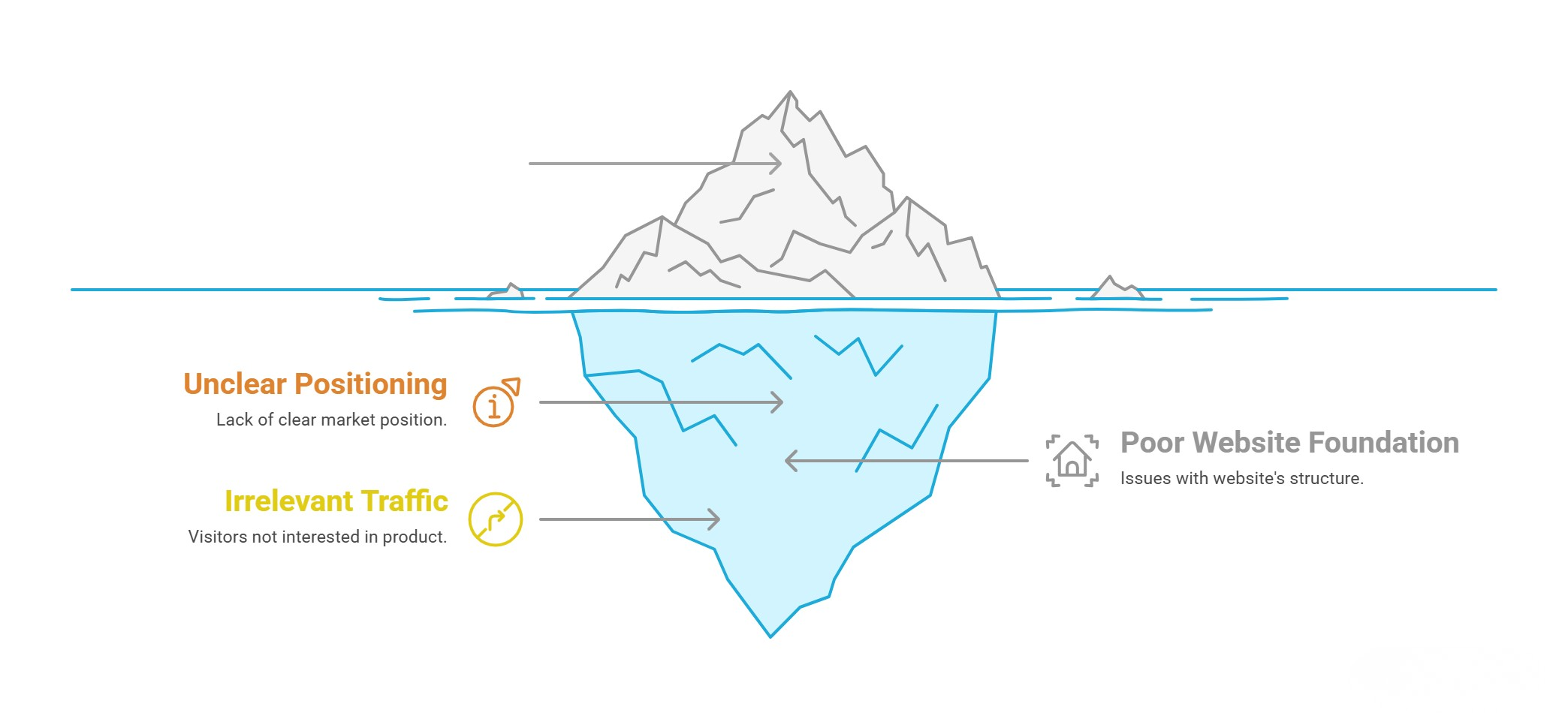
Three Foundation Cracks That Kill Your Conversions
When we look at a founder’s marketing system, we check for three cracks.
Poor positioning. You haven’t answered the big question: what makes you different? If your competitors show the same proof and results, you’re competing on price. That’s a losing game.
Unclear messaging. Your marketing tells different stories across different channels. So when prospects compare options, nothing sticks. There’s no reason in their mind to pick you over someone cheaper.
Missing first touchpoint. Your website jumps straight to “Book a call” or “Get a quote.” But buyers aren’t ready for commitment. They need a low-risk way to experience your expertise first.
Here’s what matters: buyers are 57% through their buying decision before they reach out. If you’re not giving them value at that stage, you’ve lost before the conversation starts.
What this means for you: Fix these three cracks before spending another dollar on traffic. Otherwise, you’re paying to send people to a broken system.
How to Tell If Your Foundation Is Broken
Run through these questions.
Getting traffic but no leads? Your traffic isn’t qualified, or your website doesn’t address different buyer stages. People land, look around, and leave because nothing speaks to where they are in the decision process.
Getting leads but they all want the cheapest option? You haven’t differentiated enough. Your competitors have proof and results too. You need contrarian positioning or a new category that separates you from the pack.
Closing deals but attracting clients you don’t want? You’re competing on price instead of value. You need to shift how buyers think about the decision. Move them from “how much” to “what’s the transformation.”
Foundation work comes first. Everything else is built on top of this.
The takeaway: These symptoms all point back to positioning, messaging, and trust-building. Fix the root, not the symptom.
Why We Turn Down Clients Who Want Quick Fixes
You build a house on sand, and sure, it looks fine at first.
Then the storm hits. And the house is gone.
Lots of agencies will take your money and run ads anyway. They’ll build funnels, test campaigns, tweak creatives. All while your foundation crumbles.
We don’t work that way. When a founder isn’t ready to fix the foundation first, we tell them straight up: “We’re not a good fit.”
Because we’re experts you hire for direction, not order-takers who do what you say. If there’s no trust in the first conversation, there won’t be trust when things get tough.
Here’s what gets missed: every time you take on the wrong client (one who won’t follow the process), you’re blocking space for the right one. You’re filling capacity with people who drain your team instead of energizing them.
The numbers back this. 71% of companies miss their revenue targets because they use the wrong strategies. Not because they didn’t spend enough. Because they skipped the foundation.
Here’s the point: When you say no to bad-fit clients, you create room for the ones who trust your expertise and get results.
How to Fix Your Foundation (Then Scale)
Start with positioning. What makes you different? Not better. Different. If you’re saying the same thing as your competitors, you’re invisible.
Reframe your category. Stop competing in the crowded space. Create a new one. We’re not a marketing agency. We’re a growth partner. That one shift changes how people see us.
Build your first touchpoint. Give people a low-risk way to experience what you know before asking them to commit. A resource. A small engagement. Something where the barrier is low and the value is clear.
Then scale visibility. Once the foundation is solid, ads work. Content works. Outreach works. Because people land on something worth remembering.
Attention without foundation is noise. Attention with foundation is how invisible businesses become the obvious choice.
You need visibility. That’s not the question.
The question is this: when traffic shows up, will your foundation be ready?
The core truth: Fix your roots first. Then grow.
If the fix spans more than one discipline, ONE brings the marketing, sales, operations, and development work under one accountable team.
Common Questions About Foundation-First Marketing
What if I need leads right now and don’t have time to fix my foundation?
You’ve got two choices. Run ads now and watch them underperform, or fix the foundation and get results that last. Quick fixes cost more in the long run because you’re paying for traffic that goes nowhere.
How long does it take to fix a broken foundation?
Depends on where you’re starting. Positioning work takes a few weeks. Messaging alignment across channels takes another few weeks. Building your first touchpoint could be days or weeks depending on what you create. Most businesses see everything solidify in 4 to 8 weeks.
How do I know if my positioning is strong enough?
If prospects compare you to competitors based on price alone, your positioning is weak. If they say “I need to think about it” without clear objections, your positioning isn’t clear. Strong positioning makes you the obvious choice for a specific type of buyer.
What’s an example of a good first touchpoint?
For service businesses: a free audit, a low-cost assessment, a resource library, a diagnostic tool, or a small engagement priced at $10 to $50. High value, low commitment. It proves your expertise without requiring a big decision.
Why do you turn down clients who want quick results?
Because quick results without foundation don’t last. We’re building long-term growth systems, not running short-term campaigns. If someone won’t trust our process, they won’t stick around when things get tough. We’d rather work with fewer clients who get real results.
What’s contrarian positioning?
Taking a stance against common beliefs in your industry. For example, “most agencies focus on tactics. We fix your foundation first.” It separates you from the crowd by challenging what everyone else is doing.
What’s category framing?
Creating a new category instead of competing in an existing one. Instead of “marketing agency” (crowded), we say “growth partner” (new category we own). This reframe changes how people perceive what you do and why you’re different.
Do I need to pick between contrarian positioning and category framing?
No. They work together. Contrarian positioning challenges beliefs. Category framing creates new space. Both make you stand out instead of blending in.
Key Takeaways
-
Ads don’t fix broken foundations. They expose them.
-
Three cracks kill conversions: poor positioning, unclear messaging, and missing first touchpoints
-
Buyers are 57% through their decision before talking to you. If you’re not building trust early, you’re already losing.
-
Differentiate through contrarian positioning (challenge industry beliefs) or category framing (create new space).
-
Build low-risk first touchpoints so buyers experience your expertise before committing.
-
Saying no to wrong-fit clients creates capacity for the right ones.
-
Fix your roots first. Then scale visibility.