



Service businesses waste money on marketing tactics before fixing their positioning. Without clear positioning, even perfect ads and funnels fail. When you define who you serve and what problem you solve, leads flow naturally without burning cash on tactics.
Why Positioning Matters More Than Tactics
-
Positioning is the filter for every business decision, not another marketing tactic
-
Clear positioning attracts qualified leads organically while vague positioning requires constant paid advertising
-
Narrow focus creates market authority while trying to serve everyone keeps you stuck competing on price
-
Wrong clients dilute your positioning and cost you three right clients in opportunity cost
-
Strong positioning transforms your identity from “helper” to “the go-to expert” for a specific problem
What Is Strategic Positioning?
I watched a coaching business burn $80,000 in six months on Facebook ads.
Beautiful landing pages. Slick videos. Perfect targeting.
Zero qualified leads.
When I looked at their positioning, they called themselves “life transformation experts.” What does that mean? Weight loss? Business building? Relationship coaching?
They didn’t know.
Their messaging was so generic you could copy-paste it to another coach. “Transform your life in 90 days!” They were incredible at helping burned-out executives transition into entrepreneurship.
Nobody knew that from their marketing.
Bottom line: Strategic positioning defines who you serve, what problem you solve, and why you’re the obvious choice. Without this foundation, tactics won’t save you.
Why Founders Keep Choosing Tactics Over Positioning
When leads dry up, founders think “we need more ads” or “better tactics.”
You can’t optimize your way out of a positioning problem.
Building a skyscraper on quicksand doesn’t work. The foundation matters more than the building.
When I told this coaching business to stop spending and fix their positioning first, the founder said: “But we need leads NOW. We can’t just stop everything and talk about positioning for weeks.”
That’s the addiction. They’d rather keep bleeding money on ads that don’t work than pause and fix the real problem.
I showed them the math: “You’ve spent $80K in six months with zero ROI. How’s that ‘need leads now’ strategy working?”
The lesson: Tactics feel faster but positioning creates lasting results. The addiction to quick fixes keeps businesses stuck in expensive cycles.
How to Fix Your Marketing Foundation
Real positioning work takes time. They wanted a new tagline and messaging tweaks.
I’m talking about reimagining how you show up in the market.
Once we positioned them as “the go-to for burned-out executives who want to escape corporate and build something meaningful,” everything clicked. Their messaging became magnetic because it was specific.
Their ideal clients saw themselves in the story.
Three months later: 5-6 qualified leads per day without spending on ads. Organic content and referrals brought them in.
The transformation went beyond messaging. Complete business realignment.
Instead of generic “book a call” buttons, we created “The Executive Exit Assessment.” Burned-out executives don’t want another sales call. They want clarity on whether entrepreneurship is right for them.
Their content strategy flipped completely. No more generic motivation posts about “living your dreams.” Now they shared specific stories about C-suite executives who made the leap, the real challenges of going from salary to uncertainty.
Content that only someone in their exact situation would care about.
What changed: Specific positioning creates magnetic messaging because your ideal clients see themselves in your story. Generic positioning forces you to pay for every lead.
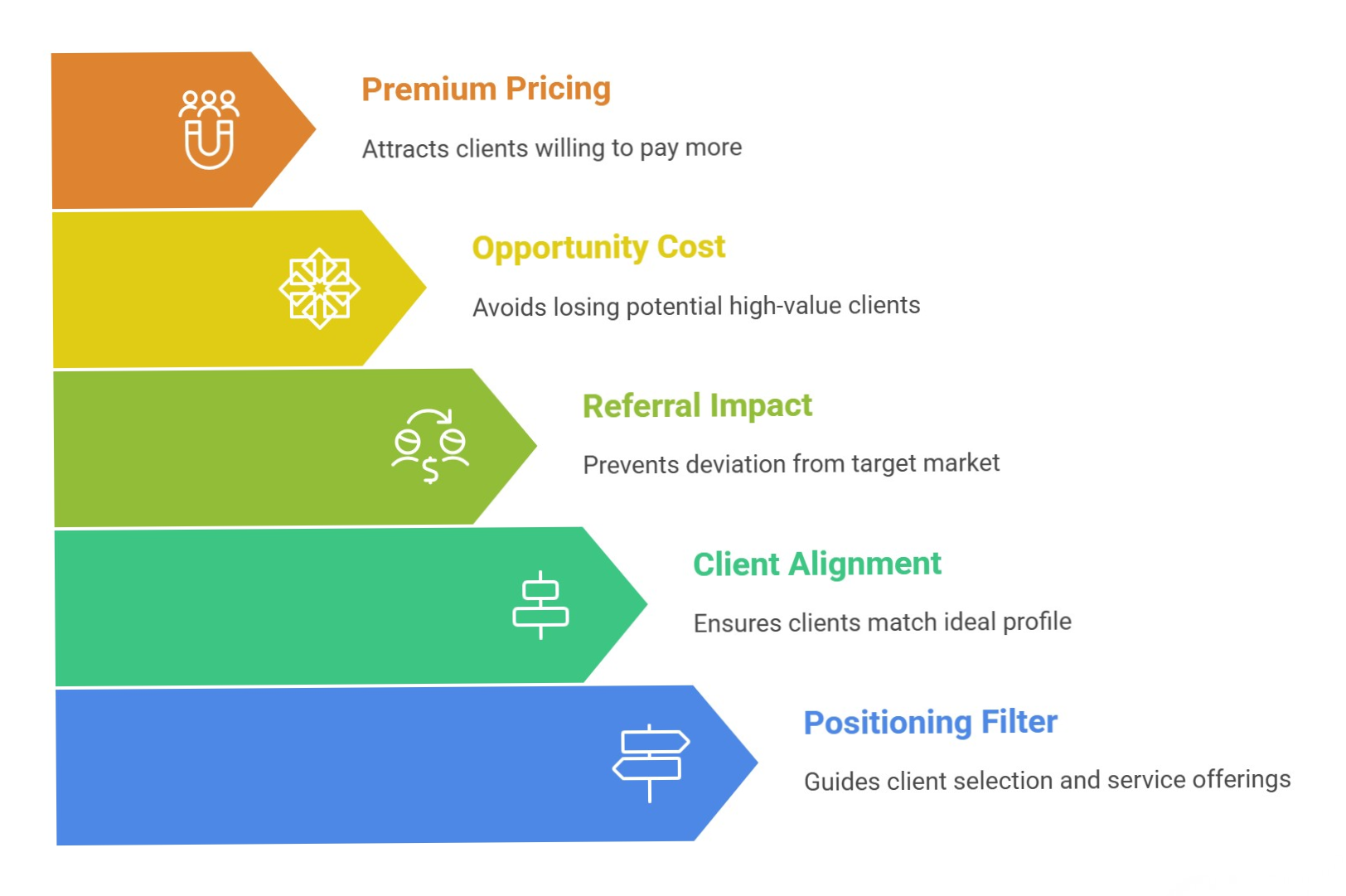
Why Positioning Is the Filter for Everything
Positioning becomes the filter for everything.
Who you work with. What services you offer. How you price.
I had another client positioned as a high-end business strategist for tech startups. A local restaurant owner wanted to hire them for $5,000.
Easy money, right? I told them to walk away.
When you take clients outside your positioning, three things happen:
-
You don’t deliver the same results because it’s not your zone of genius
-
You can’t use them as case studies because they don’t match your ideal client profile
-
They refer people like them, which pulls you further away from your positioning
That restaurant owner would’ve referred other restaurant owners. Suddenly you’re known as “the person who helps restaurants” instead of “the tech startup strategist.”
Every wrong client costs you three right clients. The opportunity cost is massive.
The tech startup client turned down that $5K restaurant gig. Three months later, they landed a $50K contract with a Series A startup. When you’re clear about who you serve, the right clients pay premium prices because you’re the expert for their specific situation.
The filter effect: Strong positioning helps you say no to wrong-fit clients so you attract high-value clients who pay premium rates.
Does Narrow Positioning Limit Your Market?
Founders worry that niching down limits their market.
The fear comes from misunderstanding how markets work.
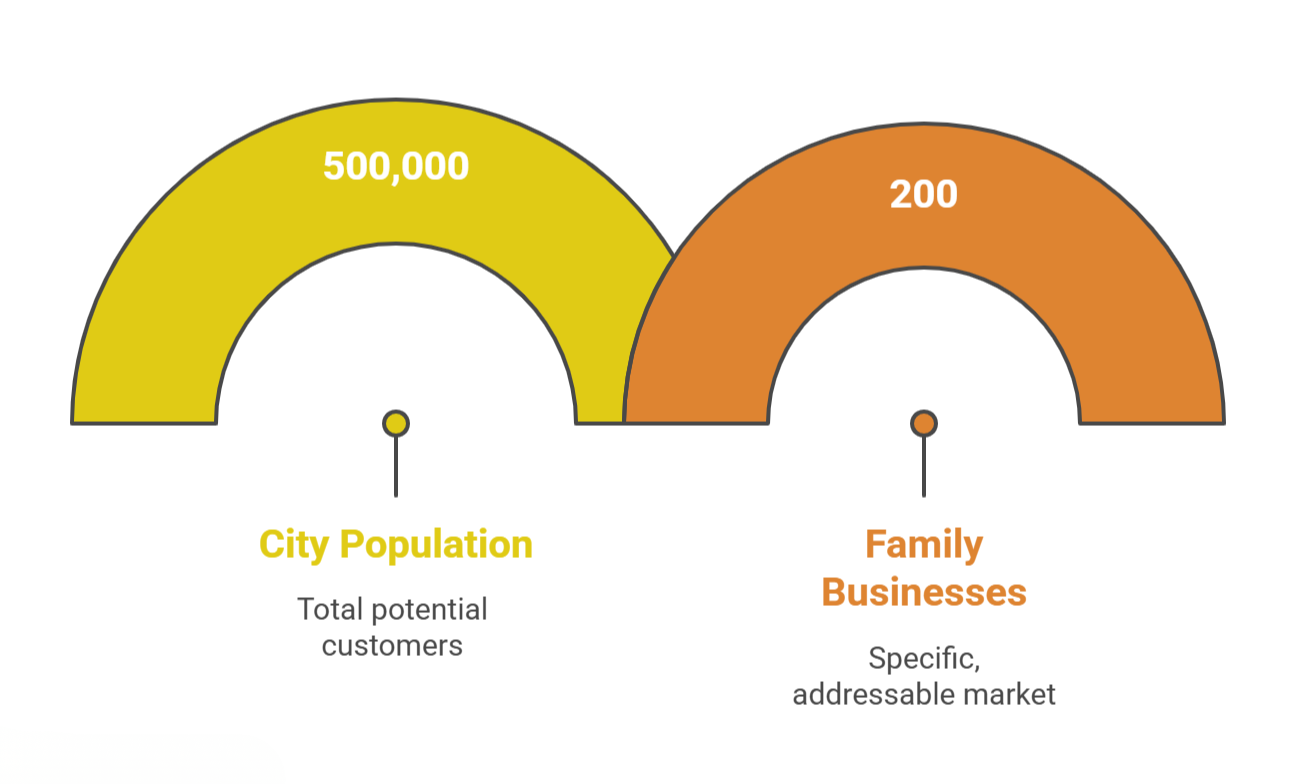
Let’s say you’re a “business consultant” in a city of 500,000 people. Sounds like a huge market. But when someone needs help, they search for “manufacturing consultant” or “restaurant consultant” or “tech startup advisor.”
You’re invisible because you’re too generic.
Flip it. You’re “the consultant for family-owned manufacturers.” There are 200 family-owned manufacturing companies in your region. Sounds tiny. Here’s what happens: you become known to ALL 200.
You speak at their industry events. You understand their specific challenges. You get referrals within their network.
I had a client shift from “marketing consultant” to “the marketing specialist for orthodontists.” His addressable market went from millions of businesses to 300 orthodontists in his region.
His revenue tripled in two years because he owned that space completely.
Research backs this up. Category leaders capture 80% of the profits in their niches even when their market share is under 50%.
Would you rather have 0.1% of a massive, generic market or 30% of a specific niche?
You’re not shrinking your market. You’re claiming territory you win.
The math: Narrow positioning gives you 100% visibility in a smaller market, which beats 0.1% visibility in a massive market every time.
How Positioning Transforms Your Identity
The shift happens when positioning transforms identity.
I call it the “holy crap” moment. They realize they’ve been playing the wrong game.
I repositioned a financial advisor who’d been struggling for three years, competing with every other advisor in town on price and generic services. We positioned him as “the retirement specialist for teachers nearing pension.”
The breakthrough came when he got a call from a teacher who said: “My colleague told me you’re THE guy who understands our pension system and how to maximize it with our 403(b).”
Not “a guy who does financial planning.” THE guy for their specific situation.
He called me almost in tears. “Patrick, she didn’t ask about my fees. She wanted to know when we could meet. She already decided I was the right choice before we talked.”
When you have clear positioning, you’re not selling anymore. You’re the obvious solution to a specific problem.
I see this breakthrough in their language. They stop saying “I help businesses with…” and start saying “I’m the go-to for…” That shift from helper to authority tells you the positioning has taken root.
The identity shift: Clear positioning transforms you from someone trying to sell services into the obvious expert clients seek out and choose before talking.
What Changes When You Get Positioning Right
True positioning transforms how you operate everywhere.
Your confidence shifts. You stop apologizing for prices because you’re THE expert for this specific problem. You start leading conversations instead of following them.
I watched a business coach who repositioned from “helping small businesses grow” to “the scale-up specialist for service companies hitting their first $1M plateau.” Before the shift, he’d get on sales calls and beg people to work with him.
After? He’d get on calls and start diagnosing their scale-up challenges. He became the doctor, not the patient. Prospects took notes instead of asking for references.
It goes deeper than sales calls:
-
Hiring changes: You look for team members who understand your niche
-
Partnerships change: You connect with other specialists who serve the same market
-
Decisions get easier: Every opportunity gets filtered through “does this reinforce my positioning or dilute it?”
You start saying no to speaking gigs that don’t fit, partnerships that muddy your message, networking events without your ideal clients.
Companies with clear positioning show 27% higher return on investment than competitors with vague positioning.
When you know who you are in the market, every action either builds your authority or weakens it.
The ripple effect: Positioning changes everything from hiring to partnerships because you filter every decision through whether it strengthens or dilutes your market authority.
How Disciplined Positioning Creates Client Success Loops
Businesses that get disciplined about positioning start small but scale fast. The ones who try to serve everyone stay stuck in feast-or-famine cycles.
I worked with a consultant doing “business strategy for small businesses.” Super broad. He was hustling for $2K projects, working with hair salons one week, accounting firms the next.
Always starting from scratch because every client was different.
When we repositioned him as “the growth strategist for family-owned manufacturing companies looking to scale beyond $10M,” everything changed. He wasn’t competing with every business consultant anymore.
He was THE guy for this specific niche.
Within 18 months, his average project went from $2K to $25K. Family-owned manufacturers have specific challenges: succession planning, modernizing operations, competing with bigger players.
He became the expert who understood their world.
The disciplined ones build what I call “client success loops”:
-
Each right client refers more right clients
-
Case studies become more powerful because they’re all in the same space
-
You charge premium prices because you’re the specialist
The “serve everyone” crowd? They’re always explaining why they’re qualified for this project. Constantly proving themselves instead of being the obvious choice.
Businesses that narrow their focus expand their opportunities.
The loop: Right clients refer right clients when your positioning is clear, creating a compounding effect where each client makes the next one easier to attract.
Steps to Build Your Marketing Foundation
After 17 years in marketing, I’ve learned this: beautiful websites and clever campaigns don’t work if your foundation is broken.
Here’s how to fix your roots:
-
Define your specific niche: Who do you serve? Get narrow. “Burned-out executives” beats “professionals.” “Family-owned manufacturers” beats “small businesses.”
-
Identify their specific problem: What keeps them up at night? What transformation do they need?
-
Position yourself as the go-to: Claim territory you win. “The retirement specialist for teachers” beats “financial advisor.”
-
Filter everything through positioning: Say no to wrong-fit clients, partnerships, and opportunities that dilute your message.
-
Build your client success loop: Let each right client refer more right clients. Your case studies should all speak to the same audience.
Most agencies jump straight into tactics. We fix your roots through our “Rooted to Rise” methodology, then watch consistent leads flow naturally.
The founders who get this stop being a commodity and start being THE choice.
Once you’re THE choice instead of another option, there’s no going back.
Your positioning determines everything that follows. Get it right, and tactics become secondary.
Get it wrong, and you’ll keep burning money on broken foundations.
Frequently Asked Questions
What is strategic positioning in marketing?
Strategic positioning defines who you serve, what specific problem you solve, and why you’re the obvious choice. It’s the foundation that comes before tactics like ads, content, or funnels. Without clear positioning, even perfect tactics fail because your messaging is too generic to attract qualified leads.
How long does it take to see results from fixing positioning?
Real positioning work takes 2-3 months to implement fully. The coaching business I mentioned saw 5-6 qualified leads per day within three months of fixing their positioning. The financial advisor repositioned as “the retirement specialist for teachers” saw immediate changes in how prospects approached him. Results compound over time as your market reputation builds.
Won’t niching down limit my potential market?
Narrow positioning gives you 100% visibility in a smaller market instead of 0.1% visibility in a massive market. A marketing consultant who repositioned from “helping all businesses” to “the specialist for orthodontists” tripled revenue in two years. Category leaders capture 80% of profits in their niches even with under 50% market share.
How do I know if my positioning is broken?
Your positioning is broken if you’re constantly explaining why you’re qualified, competing on price, attracting unqualified leads, or stuck in feast-or-famine cycles. If prospects ask “what makes you different?” your positioning isn’t clear. When positioning works, prospects already decided you’re the right choice before talking.
What happens when I take clients outside my positioning?
Every wrong client costs you three right clients in opportunity cost. Wrong-fit clients refer people like them, pulling you away from your positioning. You can’t deliver your best results because it’s not your zone of genius. Your case studies won’t match your ideal client profile, weakening your authority in your chosen niche.
How does positioning affect pricing?
Clear positioning allows premium pricing because you’re the obvious specialist for a specific problem. The consultant who repositioned as “the growth strategist for family-owned manufacturers” increased average projects from $2K to $25K in 18 months. When you’re THE expert for a specific situation, clients pay premium prices.
Should I fix positioning before running ads?
Yes. The coaching business burned $80,000 on Facebook ads with beautiful landing pages before fixing positioning. After repositioning, they got 5-6 qualified leads daily without ad spend. Running ads with broken positioning is like building a skyscraper on quicksand. Fix the foundation first, then tactics work.
What’s the difference between positioning and branding?
Positioning defines who you serve and what problem you solve. Branding is how you express that positioning visually and verbally. Positioning comes first because it’s the strategic foundation. Branding without positioning leads to beautiful but ineffective marketing that doesn’t attract qualified leads or build market authority.
Key Takeaways
-
Positioning comes before tactics: Fix your foundation before spending on ads, funnels, or content. Tactics fail without clear positioning.
-
Narrow focus creates market authority: Claiming 30% of a specific niche beats chasing 0.1% of a massive market. Category leaders capture 80% of niche profits.
-
Wrong clients cost you right clients: Every wrong-fit client dilutes your positioning and costs you three right clients in opportunity cost through misaligned referrals.
-
Positioning transforms identity: Clear positioning shifts you from “helper” to “the go-to expert,” changing how you price, sell, and make business decisions.
-
Client success loops compound growth: Right-fit clients refer more right-fit clients when your positioning is clear, creating organic growth without constant paid advertising.
-
Discipline beats tactics: Saying no to wrong opportunities protects your positioning and attracts high-value clients who pay premium prices.
-
The math favors specialists: Businesses with clear positioning show 27% higher ROI than competitors with vague positioning because every action builds authority.