



Most founders aren’t missing information. They’re drowning in it. The real competitive advantage comes from building systems that extract, organize, and deploy what’s already in your head so your business runs without you being the bottleneck.
Core Answer:
-
Competitive advantage comes from knowledge deployment systems, not information hoarding
-
Start by systematically extracting client success stories to build proof and authority
-
Use structured interviews on a consistent rhythm (weekly, bi-weekly, monthly) to maintain fresh knowledge
-
Success looks like your team executing without waiting for you to be in the room
-
Freedom means moving from execution to strategy while your business scales beyond you
Why Knowledge Stays Trapped
You know what differentiates you. You know your messaging should be sharper. You know you need consistent content.
Knowing doesn’t move the needle.
I work with founders who aren’t missing information. They’ve read the books, taken the courses, consumed the content. They’re drowning in it.
The problem? Everything they know is locked inside their head with no way to deploy it.
Here’s the truth: You’re the bottleneck.
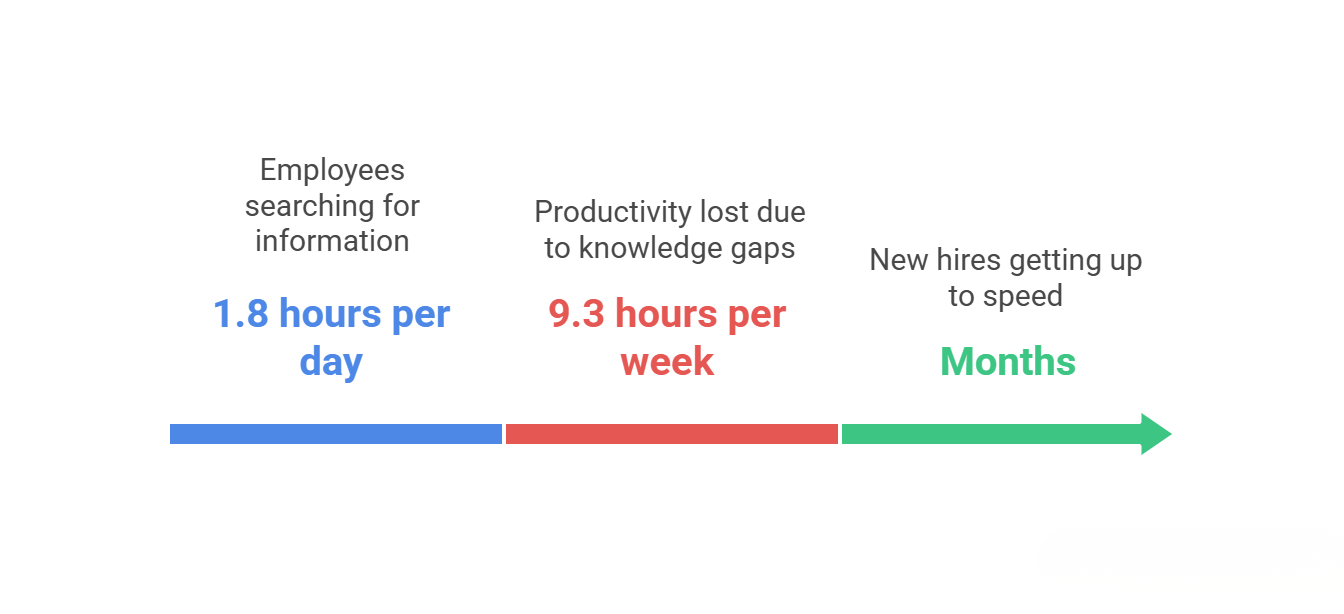
Your team waits for you to answer client questions. Content doesn’t get created unless you write it. Sales calls need your presence. New hires take months to get up to speed because the knowledge lives nowhere except in your brain.
This isn’t a time management problem. It’s a knowledge deployment problem.
Employees spend 1.8 hours every single day searching for information. That’s 9.3 hours per week lost because knowledge isn’t systematized.
Vision without implementation is worthless. You’re a brilliant strategist, but if you don’t turn what’s in your head into something your business executes, you’re self-employed with extra steps.
Key Point: The founder bottleneck kills growth. When knowledge lives only in your head, your business scales at the speed of your personal capacity.
What Creates Real Competitive Advantage
Competitive advantage doesn’t come from knowing something competitors don’t. Everyone has access to the same information now.
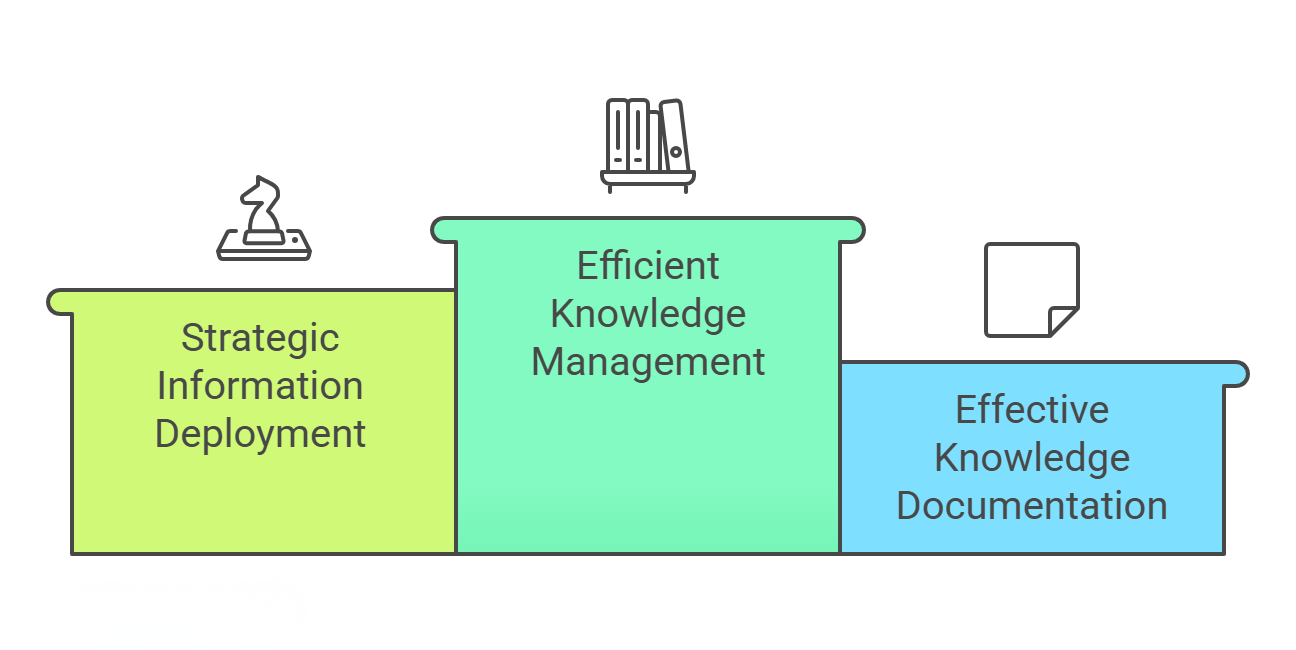
The advantage comes from how efficiently you extract, organize, and deploy what you already know.
You’ve helped dozens of clients get results. You have frameworks that work. You have stories proving your expertise. You have insights positioning you as the obvious choice.
All trapped in conversations you’ve had, experiences you’ve lived, patterns you’ve noticed but never documented.
The knowledge management market is exploding toward $3.5 trillion by 2034. Why? Businesses are realizing the companies winning aren’t the ones with the most information. They’re the ones with the best systems for turning knowledge into action.
Key Point: Information is abundant and cheap. Systems for deploying knowledge create sustainable competitive advantage.
How to Build Knowledge Systems
When you’re building knowledge systems, start with client success stories.
Extract how you’ve helped people get results:
-
The before state
-
The obstacles they faced
-
Your process
-
The after state
Do this systematically.
This knowledge deploys everywhere. Your positioning gets sharper because you see patterns in who you serve best. Your messaging becomes more compelling because you’re using real language from real situations. Your content writes itself because you have endless specific examples.
Most founders have dozens of these stories locked in their head. Once you systematically extract them, you create a knowledge base your whole team uses. Sales pulls from it. Marketing pulls from it. You don’t need to be involved every time someone needs proof.
That’s the fastest path from knowledge to revenue.
Key Point: Client success stories become the knowledge asset feeding everything else. Extract them systematically and watch positioning, messaging, and content flow naturally.
How Benske Agency Implements It
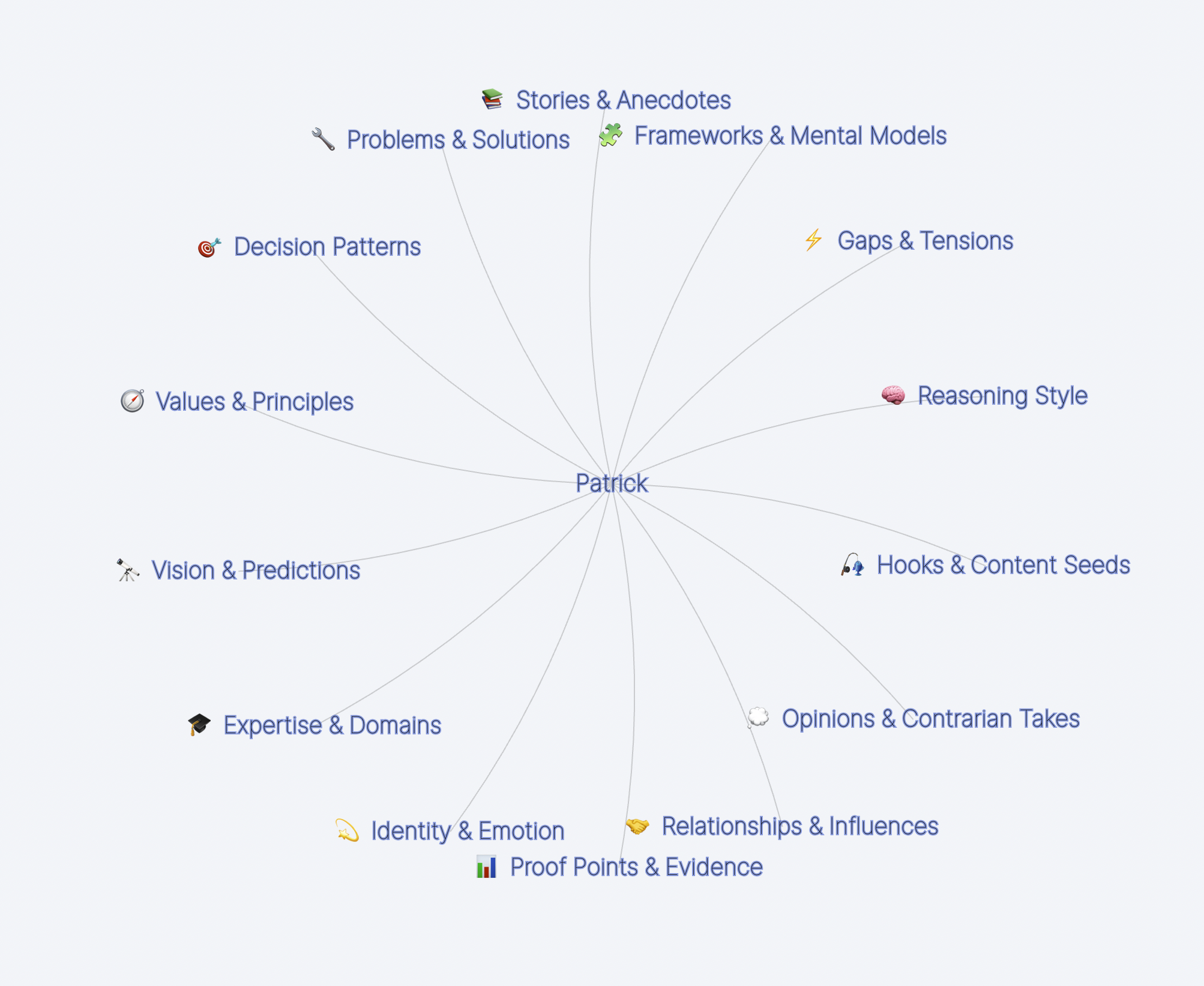
We have designed a system that extracts your best ideas, thoughts and expertise and orgnanizes into strategic pillars buildling your digital brain. This Digital Brain can be used to create new content without the founders bottleneck. The team can simply communicate with the Digital Brain and receive insights.
What Makes Knowledge Systems Work
Knowledge systems aren’t about collecting more information. They’re about making what you already know accessible and actionable.
The mechanics are simpler than you think:
-
Regular extraction through structured interviews
-
Strategic filtering based on your positioning
-
Systematic documentation your team uses
Here’s what matters: consistency.
Weekly, bi-weekly, monthly. Whatever rhythm works. The businesses maintaining their knowledge advantage are the ones that keep extracting and updating.
85% of employees say they need better access to knowledge in their organizations. Your team is probably part of that 85%.
Key Point: Consistency beats perfection. A simple system maintained regularly outperforms a complex system used occasionally.
When Knowledge Systems Start Working
You’ll know your knowledge systems are working when you stop being required for everything.
Sales calls happen without you. Content goes out without you writing every word. Team members answer client questions confidently. New hires get up to speed in weeks instead of months.
You move from execution to strategy. From doing the work to leading the business. From being self-employed to owning something scaling beyond you.
That’s freedom.
Your knowledge isn’t your competitive advantage. Your system for deploying it is.
Key Point: Freedom comes when your business executes without you being in every decision. Knowledge systems create that freedom.
Common Questions About Knowledge Systems
How do I start building a knowledge system if I’m already overwhelmed?
Start with one thing: your client success stories. Spend 15 minutes after each client win documenting the before state, obstacles, your process, and results. That’s your foundation.
What’s the difference between knowledge systems and documentation?
Documentation captures what happened. Knowledge systems extract insights, organize them strategically, and make them deployable across your business. One is static, the other is active.
How often should I update my knowledge systems?
Find a rhythm that works for you. Weekly interviews work for fast-moving businesses. Monthly works for others. Consistency matters more than frequency.
Won’t this take too much time?
Employees already spend 1.8 hours daily searching for information. Building systems saves exponentially more time than it takes to create them.
How do I know what knowledge is worth extracting?
Start with your positioning. Extract knowledge that reinforces who you serve, what makes you different, and the specific problems you solve. Everything else is noise.
What if my team doesn’t use the knowledge system?
Make it accessible and relevant. If they’re asking you questions, the answer should live in the system. Train them to check there first. Over time, it becomes the default.
Can small teams benefit from knowledge systems?
Absolutely. Small teams benefit most because every person wears multiple hats. When knowledge is systematized, everyone moves faster without waiting for the founder.
What tools do I need to build a knowledge system?
Start simple. Structured interviews (even recorded voice notes), a shared document, or a basic knowledge base tool. The system matters more than the tool.
Key Takeaways
-
Competitive advantage comes from knowledge deployment systems, not information hoarding
-
Founders become bottlenecks when knowledge lives only in their heads
-
Start by systematically extracting client success stories to build proof and authority
-
Consistency matters more than perfection. Weekly, bi-weekly, or monthly extraction keeps systems fresh
-
Knowledge systems work when your team executes without waiting for you to be in the room
-
Freedom means moving from execution to strategy while your business scales beyond you
-
Your knowledge isn’t your competitive advantage. Your system for deploying it is